Corner of the Kitchen, Top of the Game: How Miami's Undocumented Cooks Are Building Food Empires Nobody Can See
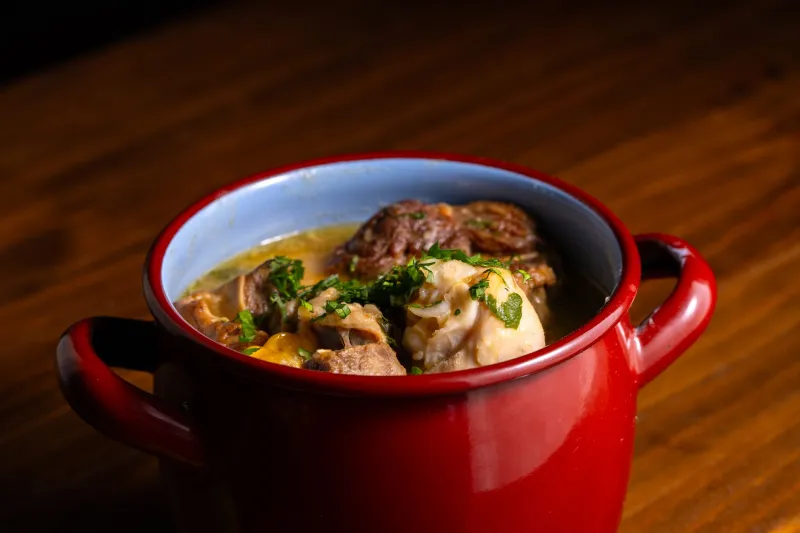
There's no sign on the door. No Instagram with a location tag. No phone number on a flyer stapled to a telephone pole. But on Friday afternoons in a modest duplex off West Flagler Street, the scent of guiso negro and slow-simmered black beans drifts through a screen door, and a line of regulars — construction workers, nurses, grandmothers — forms on the sidewalk with cash in hand. They already know what's on the menu. They've been eating here for years.
This is how a lot of Miami actually eats.
Beneath the glossy surface of the city's celebrated restaurant scene — the James Beard nominations, the celebrity chef residencies, the $28 ceviche — there exists a second economy, invisible and enormous. It runs through WhatsApp groups and Facebook Messenger threads, through church bulletins and barbershop conversations. It is powered almost entirely by people who cannot legally work in the United States, and it feeds the city in ways that no licensed establishment can quite replicate.
Meet the Operators
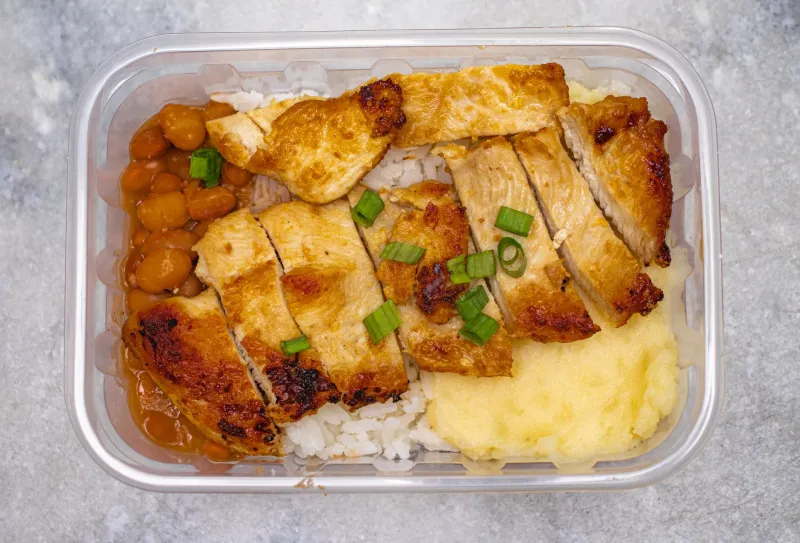
Let's call her Carmen. She arrived from Oaxaca fourteen years ago and spent her first decade in Miami cleaning houses in Coral Gables. Now she runs what she calls, with a quiet laugh, "a very small catering company." On any given week, Carmen prepares between 80 and 120 meal containers — mole negro, tlayudas, tamales de rajas — for a rotating clientele that spans three zip codes. She charges $12 to $18 per container, accepts Zelle and cash only, and has never once filed a tax return for this income. Her monthly revenue, she estimates, hovers around $3,500. Her overhead is a second-hand chest freezer and a commercial burner she bought used from a restaurant supply store in Doral.
"I know every person who buys from me," she says. "They know me. That's the whole business."
Then there's Elias, a Guatemalan cook in his late thirties who operates a weekend pop-up out of a rented garage space in Hialeah. His menu changes every Saturday morning — sometimes it's pepián de pollo, sometimes chiles rellenos, occasionally a whole roasted lamb shoulder he sources through a network of Haitian and Dominican farmers operating small hobby farms in Homestead. His customers, many of them Guatemalan immigrants themselves, pay $25 for a full plate. He sells out every week within two hours. He has never advertised. He has never spoken to a health inspector.
And there's Fatima, originally from Casablanca, who has turned her Kendall apartment into a weekly supper club for the city's North African diaspora. Every Thursday evening, she sets her dining table for twelve, serves a rotating menu of harira, bastilla, and slow-cooked merguez with charmoula, and charges $65 per head. Her guests are mostly Moroccan and Algerian professionals — architects, engineers, a pediatric dentist — who found her through a mutual friend three years ago and have never stopped coming back. "They don't come for a restaurant experience," Fatima says. "They come because they're tired of explaining what their food is supposed to taste like."
The Legal Gray Zone
Florida's cottage food laws technically allow home cooks to sell certain shelf-stable items — baked goods, jams, dried spices — without a commercial license. But the moment you're talking about meat, dairy, or anything requiring temperature control, you're operating outside the law. The people profiled here know this. They talk about it openly, with a pragmatism that comes from years of navigating systems that were never designed to include them.
"If they come, they come," Carmen says with a shrug. "But they don't come. They're not looking for me."
That invisibility is partly by design and partly by circumstance. Health departments in Miami-Dade are chronically understaffed and largely reactive — they respond to complaints rather than proactively hunting for unlicensed operations. And complaints, in these tightly knit communities, almost never come. The customer base is loyal in a way that licensed restaurants can only dream about, because the relationship is built not on branding but on genuine trust.
Elias puts it plainly: "My customers know I'm not going to give them bad food. If I do, I lose everything. There's no corporate structure to protect me. It's just me."
Word of Mouth as Infrastructure
What replaces a marketing budget, a Squarespace site, and a publicist? Apparently, a lot. Carmen's customer list grew entirely through personal referrals — a coworker's cousin, a neighbor's recommendation, a woman at church who mentioned the tamales to someone in her prayer group. Fatima's Thursday dinners have a waitlist that stretches six weeks out, built entirely through a WhatsApp group that she never promoted, just allowed to grow organically.
This informal infrastructure is remarkably efficient. Orders are placed the night before. Payment is confirmed via Zelle. Containers are ready at a specific time. Customers who show up late or cancel without notice are quietly removed from the rotation. The whole system runs with more precision than most restaurant reservation platforms.
It also creates something that licensed restaurants struggle to manufacture: genuine community. Elias knows which of his regulars just had a baby, which one is recovering from surgery, which family is saving up to bring relatives over from San Marcos. "Sometimes I make extra and just drop it off," he says. "That's not charity. That's just how it works."
Generational Wealth, Quietly Accumulated
The financial picture is more complicated than it might appear. None of these operators are getting rich — at least not in any visible sense. But Carmen has paid off a used car and is saving toward a down payment on a condo. Elias has put two nephews through community college. Fatima is financing her daughter's nursing degree, one Thursday supper at a time.
Without access to business loans, commercial leases, or formal credit, they've built something resilient precisely because it costs almost nothing to run. There are no landlords to negotiate with, no staff to manage, no liquor licenses to renew. The margin on a container of mole negro, when your kitchen is already paid for, is extraordinary.
It's a form of accumulation that doesn't show up in any economic data, doesn't contribute to the tax base, and doesn't get counted in any measure of Miami's culinary industry. And yet it's feeding the city's working class in ways that are, by almost any measure, irreplaceable.
What the City Owes Them
There's a version of this story that ends with a raid, a citation, a fine, a shutdown. That happens sometimes. But mostly it doesn't, because these operations are too small, too quiet, and too well-embedded in communities that protect them.
There's another version that ends with a food truck license, a brick-and-mortar, a feature in a national food magazine. That happens too — occasionally a cook from this world finds a pathway into legality, usually through a sympathetic restaurateur or a nonprofit food business incubator.
But for most of them, the goal isn't visibility. It's sustainability. It's feeding people well, making enough to matter, and staying under the radar of a system that has never particularly wanted them in it.
Miami's most celebrated chefs talk a lot about authenticity. About honoring ingredients, respecting technique, cooking from memory. Carmen, Elias, and Fatima aren't talking about any of that. They're just cooking the food they know, for the people who need it, from the corners of their kitchens.
That's the whole empire.