Memory Has a Price Tag: The Booming Market for $80 Empanadas and Ancestral Recipes in Miami
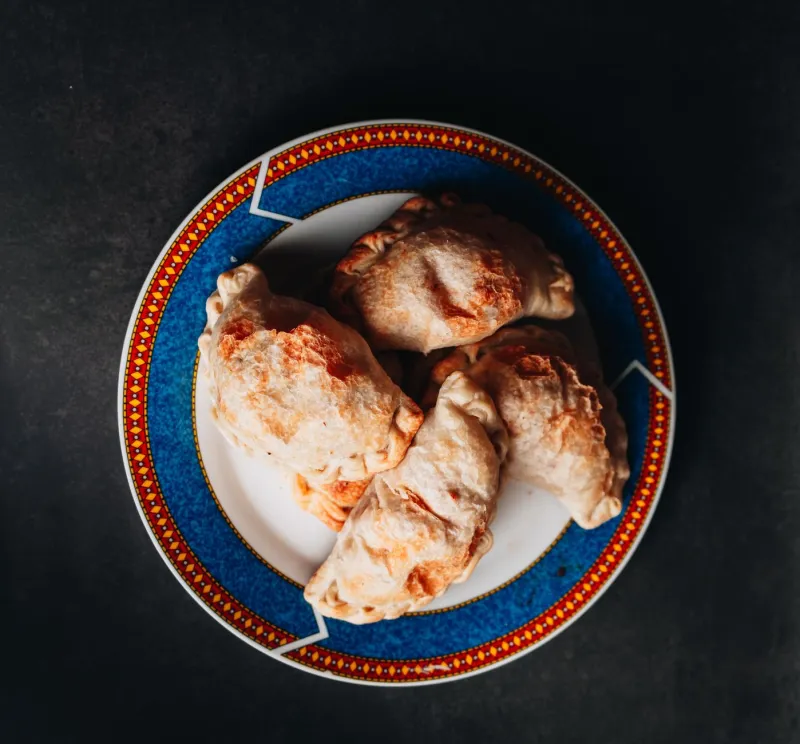
Let's be clear about what we're talking about. Not an empanada that happens to be good. Not an empanada made with quality ingredients by a skilled cook who respects the form. We're talking about an empanada that tastes like a specific place — a particular village in Mendoza, a specific kitchen in Salta — made by a specific woman who is no longer alive, in a way that has not been replicated since. That is what certain Miami chefs are selling. And certain Miami diners are paying for it as if it were a controlled substance.
Seventy-five dollars. Eighty. In one recent pop-up on the Upper East Side, a set of four handmade empanadas — filled with a spiced beef picadillo using a family recipe from a small town in Argentina's Tucumán province — sold for $95 per order. They sold out in eleven minutes.
The Anatomy of Nostalgia Pricing
To understand why someone pays $80 for an empanada, you have to understand what they're actually buying. It's not the pastry. It's not even the filling, though the filling matters enormously. What they're buying is specificity. The particular ratio of cumin to paprika that existed in one kitchen. The precise thickness of the dough that a woman named Beatriz rolled every Sunday for forty years before she died. The way the fat renders at a temperature that a gas oven in a Miami apartment can only approximate, never quite replicate.
Chef Valentina Ríos, who runs a reservation-only supper club in Wynwood that books out months in advance, calls it "emotional terroir." She charges $140 per person for a ten-course menu built entirely around the food of a single region of Colombia — not Colombian food in general, but the specific highland cuisine of Nariño, where her grandmother's family has lived for six generations. "Every ingredient I use, I can trace to a specific farm, a specific family, a specific tradition," she says. "That's not a selling point. That's just the truth of the food."
But it is also, undeniably, a selling point. And Valentina knows it.
Who's Paying and Why
The customer base for this kind of experience is not what you might expect. It's not primarily wealthy non-Latinos performing culinary tourism. It's the diaspora itself — second-generation Colombian-Americans who have never been to Nariño, Venezuelan professionals in Brickell who haven't seen their hometown in a decade, Cuban-Americans in their fifties who grew up eating approximations of their parents' food and are hungry, in the most literal sense, for the real thing.
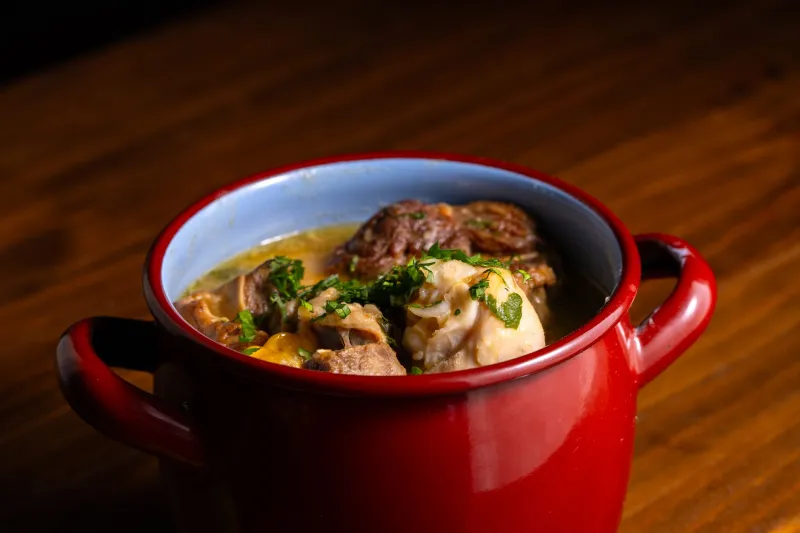
"I cried at the table," admits Marco, a 44-year-old Venezuelan engineer who attended one of Valentina's dinners last spring. "I don't even know exactly what triggered it. It was a soup. Just a soup. But it tasted like being a child in a place I can't go back to."
That emotional response is, of course, exactly what's being sold. And here's where things get complicated.
Authenticity Theater or Genuine Preservation?
There's a version of this trend that is straightforwardly exploitative — chefs performing ancestral authenticity as a marketing strategy, charging premium prices for a story that may be more curated than real. The food world has seen this playbook before. "Heritage" as a price multiplier. "Grandmother's recipe" as branding. The diaspora, in this cynical reading, becomes a captive market, emotionally vulnerable and willing to pay whatever it takes to feel close to something they've lost.
Some critics within Miami's culinary community are starting to say this out loud. "There's a difference between preservation and monetization," says one chef who asked not to be named. "When you're charging $80 for something that was always a poor person's food, you're making a choice about who gets to access their own culture."
It's a fair point. Empanadas, arepas, tamales — these are working-class foods. They were born in economies of scarcity, designed to feed families with cheap ingredients. The act of elevating them to luxury status is, at minimum, a tension worth examining.
But the chefs doing this work push back hard on the exploitation framing. Chef Andrés Montoya, who runs a hyperlocal Peruvian pop-up in Little Havana focused exclusively on the coastal cuisine of the Piura region, argues that what he's doing is closer to archival work than restaurant work. "These recipes exist in my family's memory and nowhere else," he says. "If I don't cook them, they disappear. The price I charge allows me to source the right ingredients, pay myself for the research, and keep doing this. It's not a scam. It's a survival strategy for the food itself."
The Scarcity Machine
Part of what drives prices up is genuine scarcity — not manufactured, but real. The specific ají amarillo paste that Andrés uses is not available at any Miami market. It comes from a family in Piura who makes it once a year and ships it through a network of relatives. The heirloom masa that Valentina uses for her arepas de choclo is grown by a single farmer in Colombia and imported in quantities so small that she has to ration it across her dinner calendar.
When an ingredient is genuinely irreplaceable, the economics change. You're not paying for labor and overhead in the traditional sense. You're paying for access to something that barely exists.
This is the Mediterranean parallel that Miami's food scene keeps circling back to. Greek chefs in the city's growing Hellenic dining corridor talk about the same dynamic — specific olive oils from specific Cretan villages, dried herbs from islands where the microclimate creates flavors that simply cannot be reproduced elsewhere. The luxury nostalgia market isn't unique to Latin American cuisine. It's a global phenomenon, and Miami sits at an especially rich intersection of diasporas, each with its own irreplaceable pantry.
The Question Nobody Wants to Answer
So is it worth it? Is an $80 empanada ever worth $80?
The question itself might be the wrong one. Worth is relational. For Marco, crying over a soup in Wynwood, the answer is obviously yes — not because the soup was technically superior to anything he could get elsewhere, but because it did something to him that nothing else could. It closed a distance. It made him feel, briefly, like the world was smaller and more connected than it usually seems.
For others, the price is a barrier that turns cultural food into cultural tourism — accessible only to those with the income to treat memory as a luxury good.
Miami's luxury nostalgia market will keep growing. The diaspora is enormous, the longing is real, and the chefs doing this work are, mostly, genuinely skilled and genuinely committed to what they're preserving. But as the prices climb, the conversation about who gets to eat — and who gets left outside the pop-up — is one the city's food community can't afford to avoid.