Straight from the Grove: How Miami Chefs Became Obsessed with Single-Origin Olive Oil
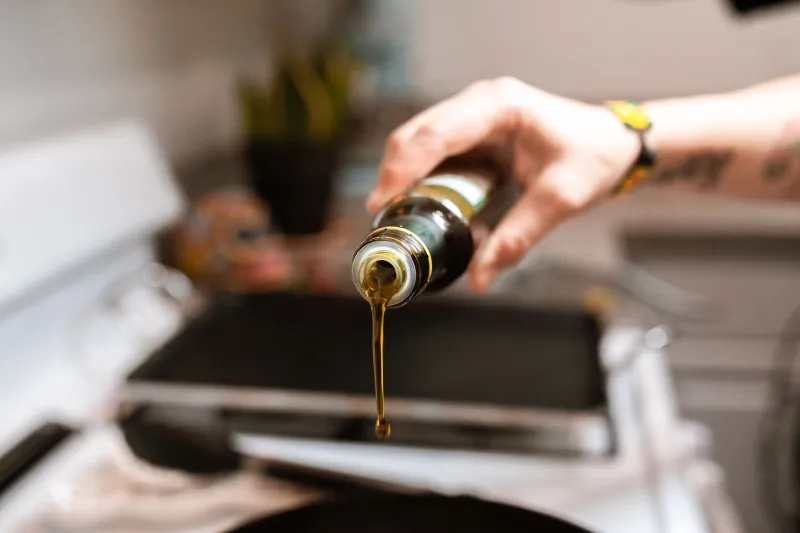
For years, olive oil lived a quiet life on the shelf. It sat in those tall, dark bottles next to the vinegar, bought by the liter at Costco, poured with a loose hand, and rarely thought about twice. In most American kitchens — even good ones — it was infrastructure. Background. A given.
Not anymore. Not in Miami, anyway.
Across the city's most ambitious Latin and Mediterranean kitchens, a quiet rebellion is underway. Chefs are tossing out the generic supermarket stuff and going straight to the source — small family farms in Crete, Andalusia, Sicily, and the Peloponnese — to get their hands on oil that tastes like it was pressed yesterday. Because sometimes it basically was.
The Problem with the Bottle
Here's something most people don't realize: olive oil goes stale. Not in the dramatic way milk does, but stale nonetheless. The polyphenols — those compounds responsible for the grassy bitterness and peppery finish in a truly great oil — begin degrading from the moment the olives are crushed. By the time a bottle travels from the grove to a distribution warehouse to a supermarket shelf to your pantry, months have passed. Sometimes more than a year.
"What most Americans think olive oil tastes like is not what olive oil actually tastes like," says Chef Marisol Fuentes, who runs a small but fiercely devoted Mediterranean-Latin kitchen in Wynwood. "When I had my first taste of fresh-harvest oil from a small producer in Jaén, I genuinely thought I was eating a different ingredient."
She wasn't wrong to be confused. Fresh single-origin olive oil — particularly early-harvest varieties pressed from green, slightly underripe olives — can taste almost shockingly alive. Grassy. Bitter. Peppery at the back of the throat in a way that makes you cough if you're not ready for it. Italians call that little cough la pizzica, and they consider it a mark of quality.
Going Direct
The logistics of sourcing oil this way aren't simple. Unlike wine, which has an established direct-import infrastructure in the US, single-origin olive oil is still largely a niche pursuit. Most small Mediterranean producers don't have US distribution deals. Which means chefs have to do the legwork themselves.
Some are flying to Spain or Greece during harvest season — typically October through December — to taste oils at the mill and negotiate small-lot purchases directly with growers. Others are building relationships through importers who specialize in artisan oils, the same way wine buyers cultivate relationships with boutique négociants.
Chef Dario Ithurbide, who helms a Coral Gables restaurant known for its Peruvian-Mediterranean fusion menu, made his first sourcing trip to a small cooperative in the Kalamata region two years ago. He came back with six different oils, each pressed from a different olive variety — Koroneiki, Manaki, Athinolia — and each with a distinct flavor profile.
"I started treating them the way a sommelier treats wine," he says. "This one's got a roasted almond finish, it goes with raw fish. This one's green and bitter, it's for finishing grilled lamb. This one's got a floral thing happening, it works on dessert."
Dessert. That's where things get genuinely interesting.
Oil on the Sweet Side
Using olive oil in pastry isn't new — Mediterranean baking has relied on it for centuries. But Miami chefs are pushing the idea further, using high-quality single-origin oils as a finishing element in sweet dishes the way a pastry chef might reach for fleur de sel or aged balsamic.
At a small Brickell spot known for its Catalan-influenced tasting menu, the pastry chef finishes a citrus panna cotta with a few drops of a Sicilian Nocellara oil — fruity, buttery, with a clean finish that cuts through the cream without overwhelming it. The result tastes like something you'd eat on a terrace in Palermo. Which, in Miami heat, isn't a bad thing to aim for.
Fuentes does something similar with her churro service, drizzling a grassy Arbequina oil over warm churros dusted with smoked salt and serving it alongside a dark chocolate dipping sauce. "The bitterness of the oil and the bitterness of the chocolate amplify each other," she explains. "It sounds weird until you taste it. Then it sounds obvious."
The Economics of Liquid Gold
None of this comes cheap. A 500ml bottle of genuinely excellent single-origin olive oil — the kind pressed to order, shipped within weeks of harvest, and traceable to a specific grove — can run anywhere from $25 to $60 retail. For a restaurant buying in volume, even at wholesale prices, the numbers add up fast.
But chefs who've made the switch argue the economics work out differently when you stop treating oil as a cooking medium and start treating it as a finishing ingredient. You use less. You use it with intention. A drizzle of something extraordinary does more work than a glug of something forgettable.
"I spend more on oil now than I ever did," Ithurbide admits. "But I also waste almost none of it. Every drop is doing something specific."
There's also a marketing dimension that Miami's food-savvy dining public is increasingly receptive to. A table-side pour of a named, single-origin oil — with a brief explanation of where it came from and what makes it different — is the kind of detail that turns a meal into an experience. It's the same instinct that drives natural wine lists and heritage grain menus. People want to know the story behind what they're eating.
Tasting Like a Pro
For the curious, the entry point into serious olive oil appreciation is easier than it sounds. Professional tasters evaluate oil in small blue glasses — the color masks the visual cues so you're judging purely by smell and taste. But at home, a small ceramic bowl works fine.
Warm the oil slightly in your palms, then smell it before you taste. Fresh oil should smell alive — cut grass, green tomato, artichoke, almonds, sometimes herbs. If it smells like crayons or old wax, it's past its prime. On the palate, look for that peppery finish. A strong pizzica means high polyphenol content, which means both better flavor and better health benefits.
Pairing logic is intuitive once you get the hang of it. Robust, bitter, high-intensity oils — typically early-harvest Koroneiki or Picual — work with bold flavors: grilled meats, aged cheeses, strong fish. Milder, buttery oils — Arbequina, Frantoio — suit delicate applications: raw fish, fresh vegetables, light pasta dishes, and yes, desserts.
Miami's Moment
There's something fitting about this obsession taking root here. Miami has always been a city that understands the value of things that travel well — ideas, ingredients, people. The Latin and Mediterranean culinary traditions that define so much of what this city eats have always placed serious weight on the quality of foundational ingredients. Good olive oil isn't a luxury in those traditions. It's a baseline expectation.
What's changing is that Miami's chefs are now demanding that baseline be higher. They've tasted what's possible. They've made the calls, booked the flights, built the relationships. And they're not going back to the big bottle on the shelf.
Some things, once you know better, you can't unknow.