Flour, Flame, and Patience: How Miami's Bakers Are Burning Down the Industrial Bread Playbook
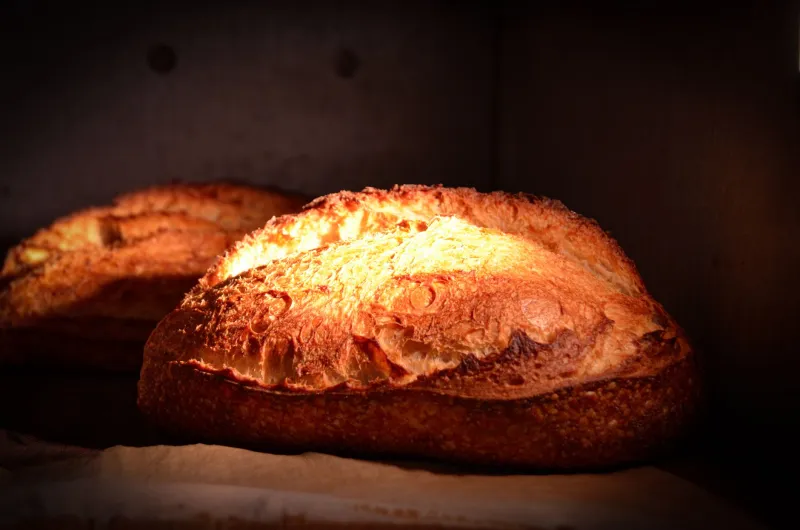
There's a moment, usually around 5 a.m., when the inside of a wood-fired bakery smells like something between a campfire and a kitchen that's been cooking since your grandmother's grandmother was alive. It's earthy. It's slightly sweet. It's a little wild. And if you've been lucky enough to catch that smell drifting out of one of Miami's newer artisan bakeries, you already know something important is happening to bread in this city.
This isn't the sourdough boom of 2020, though that certainly cracked the door open. What's going on right now in neighborhoods from Little Havana to Wynwood to the edges of Little Haiti is more deliberate, more rooted, and a lot more complicated than keeping a starter alive on your kitchen counter. Miami's bakers are going back — way back — to reclaim the grains, the fire, and the time that industrial bread production spent the last century trying to eliminate.
Why the Industrial Loaf Lost the Room
For decades, Miami ate bread the way most of America did: soft, fast, and forgettable. Supermarket loaves built on commodity wheat, commercial yeast, and a list of stabilizers long enough to fill a chemistry syllabus. Even the pan sobao and Cuban bread that define this city's bakery identity — those long, lard-kissed loaves that come out of ventanas all over Calle Ocho — got gradually absorbed into a faster, cheaper production model that prioritized consistency over character.
But something shifted. Partly it was the pandemic-era obsession with fermentation and slow food. Partly it was a generation of Miami cooks and eaters who'd spent time in Spain, Colombia, Lebanon, and Italy and came home with a different idea of what bread should feel like in your hand and taste like on your tongue. And partly, honestly, it was disgust. A growing number of bakers here got fed up with flour that behaved like cardboard and yeast that tasted like nothing.
"When I started asking questions about where my flour actually came from, I didn't like the answers," says one baker operating a wood-fired micro-bakery out of a converted garage in Allapattah. "It was commodity wheat from God knows where, processed so aggressively that most of the nutrition — and all of the flavor — was gone before it ever reached me."
The Grain Hunt
The pivot toward heritage grains is where this story gets genuinely interesting, and where the Latin and Mediterranean thread that runs through Miami's food culture starts to pull tight.
Varieties like Red Fife, Einkorn, Sonora White, and Khorasan — grains that predate modern hybridization by centuries — are making their way into Miami bakeries through a growing network of regional grain farmers and small mills scattered across the Southeast. Some bakers are sourcing from Florida producers directly, connecting with farms that are quietly reviving grain agriculture in a state not historically known for it. Others are working with mills in Georgia and the Carolinas that have spent the last decade rebuilding relationships with heirloom seed banks.
What these grains bring to the table — literally — is a depth of flavor that modern wheat simply can't match. Einkorn has a nuttiness that borders on buttery. Sonora White, which has roots in Spanish colonial agriculture and was grown across the Americas for centuries before commodity farming crowded it out, produces a softer crumb with a faintly sweet, almost floral quality. For bakers with Latin roots, that historical connection hits different.
"Sonora wheat came to the Americas with Spanish missionaries," notes one baker of Cuban descent who runs a small operation in Hialeah. "There's something that feels right about using it here, in a city like Miami. It traveled. It adapted. So did we."
The Oven Is the Point
Heritage grain is only half the equation. The other half is fire.
Building a wood-fired oven is not a casual commitment. It takes serious money, serious space, and a serious tolerance for the learning curve that comes with cooking in a chamber that doesn't have a digital readout. The heat is alive. It moves. It peaks and it falls, and coaxing a consistent bake out of it takes months of practice and a kind of intuitive attention that no commercial deck oven requires.
So why are Miami bakers doing it anyway?
Because the crust is different. Full stop. The combination of radiant heat from the stone floor, convective heat from the fire, and the steam trapped inside the chamber during the first phase of the bake produces a crust that crackles in a way that electric and gas ovens simply cannot replicate. The Maillard reaction — that complex browning process responsible for flavor development — goes deeper and faster in a wood-fired environment. The result is a loaf with a crust that has actual flavor, not just color.
Inside the crumb, the story continues. Long fermentation with wild yeast — the kind that takes 24 to 48 hours rather than 90 minutes — combined with heritage grain flour produces a texture that's open and irregular, with a chew that holds up to tearing. It's bread that pushes back a little. Bread that reminds you it used to be wheat.
Miami's Bread Culture Meets Its Moment
What makes this movement specifically Miami is the way it's absorbing influences from every corner of the city's food diaspora. You'll find bakers incorporating annatto into their dough, giving loaves a golden hue and a subtle earthiness that nods to Caribbean cooking. Others are finishing their wood-fired rounds with za'atar-spiked olive oil, blurring the line between a Levantine flatbread tradition and a Southern European country loaf. A few are experimenting with adding toasted corn — masa-adjacent, but not quite — into heritage grain blends, chasing a flavor that feels both ancient and unmistakably Miami.
The neighborhood bakeries leading this charge aren't operating at scale. Most are selling out of small batches two or three times a week, building waitlists, doing pop-ups at farmers markets. The economics are honest: heritage grain costs more, wood-fired baking is labor intensive, and slow fermentation means you can't just bake on demand. But the people buying these loaves are paying attention in a way that Miami bread buyers haven't in a long time.
There's also a generational handoff happening in some of the city's older Cuban bakeries, where the next generation is asking hard questions about whether the family's bread can evolve without losing its soul. Not every answer looks like a wood-fired oven and a bag of Einkorn. But the conversation is alive, and that matters.
What This Means for the Plate
Bread is never just bread. It's what you put on the table first, what you use to soak up the last of the mojo, what you hand someone when the meal is over and you want them to feel like they were actually fed. In a city where the table is always crowded and the flavors are always bold, bread has historically been a supporting player.
What Miami's new bakers are arguing — with their heritage grains and their wood fires and their 36-hour ferments — is that bread deserves to be a main character. That a loaf with real flavor can hold its own next to a plate of ropa vieja or a bowl of harira. That the foundation of the meal should taste like something.
So far, the city seems to agree. The bread is selling out. The ovens are staying hot. And somewhere in Miami, right now, at an hour when most people are still asleep, a baker is feeding a fire and waiting for something ancient to come back to life.