Packed in a Suitcase, Cooked into a Legend: How Rare Ingredients Are Sneaking Into Miami's Best Kitchens
The conversation starts, as so many good ones in Miami do, over coffee. A chef — let's say he runs a well-regarded restaurant in the Design District, the kind of place that gets mentioned in the same breath as the city's best — is explaining to me why his mole negro tastes different from every other mole negro in South Florida. He's animated, leaning forward, clearly proud. And then he stops himself.
"I can't tell you exactly where I get the chilhuacle," he says. "I mean, I can tell you. But I probably shouldn't."
The chilhuacle — a smoky, earthy dried chile from a specific microregion in Oaxaca that is effectively impossible to source through legitimate commercial channels in the United States — arrives in his kitchen via a rotating cast of couriers: relatives of his sous chef, visiting chefs passing through, occasionally a trusted produce distributor who makes a point of not asking too many questions about what his clients slip into their orders. It is, by any strict reading of US customs law, contraband. It is also, by any honest reckoning, irreplaceable.
Welcome to Miami's culinary underground.
Why the Legal Supply Chain Fails
To understand why chefs resort to suitcase smuggling, you need to understand how spectacularly the legal import system fails at the level of specificity that serious cooking demands. The USDA and FDA maintain extensive lists of prohibited or restricted agricultural products — many fruits, fresh vegetables, certain plant materials, and numerous processed food items require permits, inspections, or are banned outright to prevent the introduction of pests or pathogens. The rules exist for good reasons. They also make no distinction between a mass-produced commercial spice blend and a batch of heirloom dried herbs that exist in quantities too small to ever threaten an ecosystem.
"The system treats everything like it's a commodity," says one Miami importer who works primarily with Mediterranean products and asked that his name not be used. "It doesn't understand that some things only exist in one village, made by one family, in quantities of maybe 50 kilos a year. There's no infrastructure for that. So it just gets called illegal and that's the end of the conversation."
For chefs trying to cook with the precision that genuine regional cuisine demands, this is a dead end. The commercial alternatives — dried spices from large distributors, standardized imports from industrial farms — are not the same product. They are approximations. Good enough for most purposes, not good enough for the kind of cooking that requires a specific flavor memory to remain intact.
The Suitcase Economy
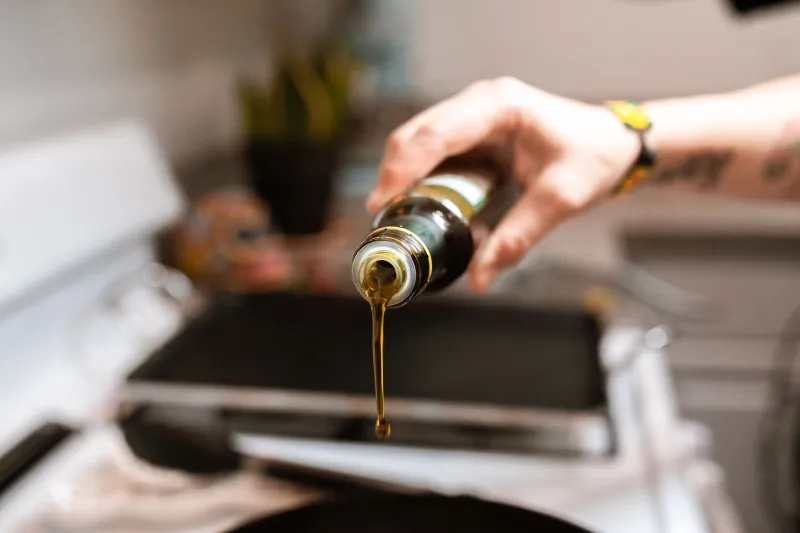
So the suitcases come. Every chef we spoke to for this piece — and we spoke to eleven, across Latin American and Mediterranean restaurants — described some version of the same arrangement. A relative visits from Guadalajara and packs a kilo of dried pasilla mixe alongside their clothes. A line cook's mother flies in from Athens carrying a jar of wild thyme harvested from a hillside in the Peloponnese that no commercial producer has ever bothered to cultivate. A Greek-American restaurateur in Coconut Grove gets a package from a cousin in Crete twice a year — olive oil, dried herbs, a specific sea salt — that he describes, without irony, as "the most important delivery I receive."
The quantities are small. The risk of detection is real but manageable — US Customs and Border Protection processes roughly 1.1 million passengers daily at major airports, and while agricultural inspections are thorough by international standards, they are not equipped to identify every heirloom dried chile or hand-packed spice blend that passes through. Chefs know this. They also know that the penalties for getting caught — typically a fine and confiscation — are calibrated for commercial smugglers, not someone carrying a jar of dried oregano from their grandmother's garden.
"The worst that happens is they take it," says one Peruvian chef with a shrug. "So you try again next time."
What's Actually Coming Through
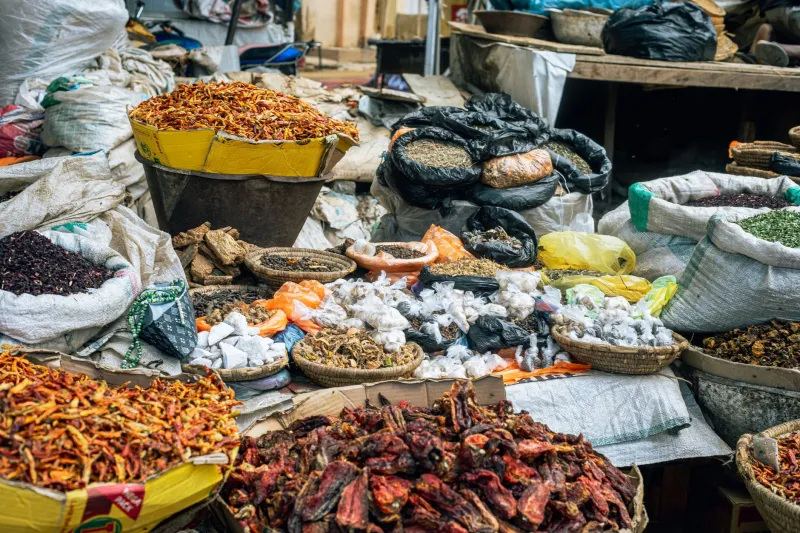
The ingredients that chefs describe sourcing through informal channels form a kind of inventory of the world's most stubbornly regional flavors. From Mexico: specific dried chiles — chilhuacle, chile de agua, pasilla de Oaxaca, chilcostle — that are either not exported commercially or are exported only in degraded, improperly dried forms that bear little resemblance to the fresh-dried product. Heirloom corn varieties for masa. Specific cacao from single-family farms in Tabasco. Dried epazote with a potency that the commercial version never achieves.
From the Mediterranean: wild oregano from specific Greek islands — particularly Crete and Kefalonia — where the combination of altitude, soil, and climate produces an essential oil concentration that commercial cultivated oregano doesn't approach. Specific olive varieties pressed in small batches. Dried figs from Calabria. Bottarga from Sardinia in forms that technically require permits to import. Preserved lemons made with a specific Moroccan variety that doesn't grow commercially in North America.
From the Caribbean: scotch bonnets and habaneros from specific regional landraces that taste measurably different from the standardized varieties grown commercially in Florida. Specific cured pork products from Cuba — a category that remains under strict embargo and represents perhaps the most legally fraught item on this list.
"I had a cook who brought back a piece of chorizo from Havana in his carry-on," one chef tells me, grinning. "I didn't ask how. I just cooked with it. It was extraordinary."
The Customs Side of the Story
A CBP spokesperson, reached for comment, emphasized that agricultural inspection rules exist to protect American agriculture and public health, and that violations — even for small quantities — can result in fines, confiscation, and in commercial cases, criminal charges. "We take these regulations seriously regardless of the intended use," the statement read.
Off the record, a former CBP agricultural specialist offered a more nuanced view. "We're looking for pests, pathogens, commercial smuggling operations," she said. "A chef carrying a small amount of dried spices for personal use — technically illegal, yes, but it's not what we're focused on. The system isn't designed for that level of granularity."
That gap between the rule and its enforcement is where Miami's culinary underground lives.
The Flavor You Can't Fake
Back in the Design District kitchen, the chef is plating a bowl of mole negro that has been cooking since yesterday morning. The chilhuacle — the one he can't quite talk about — has been toasted, soaked, blended, and reduced alongside a dozen other chiles, chocolate, and a handful of other components into something that is, even to a non-expert palate, noticeably different from anything you'd find in a commercial Mexican restaurant.
There's a depth to it. A specific kind of smoke. A bitterness that resolves into something almost sweet at the back of the throat. It tastes like it came from somewhere specific. Because it did.
"This is not a recipe you can make with what's available at the store," he says simply. "The ingredient is the recipe. If you change the ingredient, you change the dish. It's not the same thing anymore."
In Miami, where so much of the food culture is built on the premise that the real thing matters — that the specific memory of a specific place is worth chasing, worth paying for, worth packing into a suitcase and carrying across a border — that argument lands harder than almost anywhere else. The suitcases keep coming. The kitchens keep cooking. The flavors stay alive.
Sometimes that's how preservation works.