Cooking on Borrowed Ground: How Miami Chefs Are Adapting to a Florida That's Changing Fast
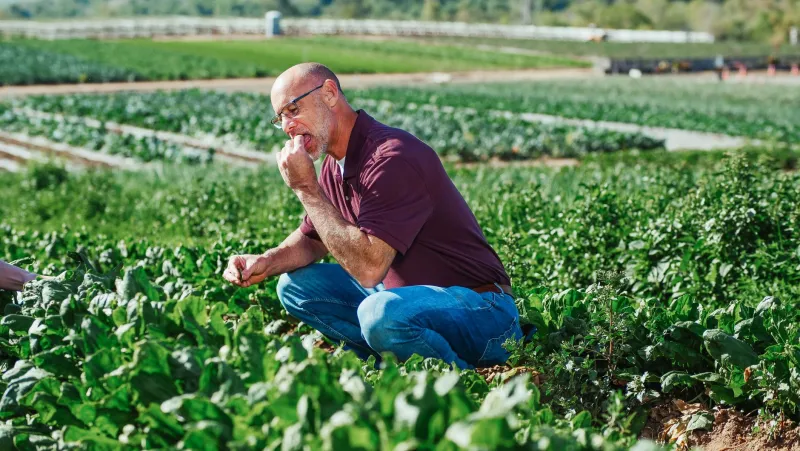
Somewhere in Homestead, a farmer named Rodrigo Esteves is standing at the edge of a field that should be full of culantro right now. It's not. The soil is too wet — again — from a rain pattern that didn't exist five years ago. He pulls out his phone and texts the chef he's been supplying for a decade: Running two weeks behind. Maybe three.
The chef, who runs a Colombian-Mediterranean fusion spot in Coral Gables, stares at the message and starts mentally rewriting a dish she's had on her menu for six years.
This is Tuesday in Miami's food world now.
The Calendar Broke
For chefs whose cooking is built on ancestral knowledge — the knowledge that certain ingredients arrive at certain times, that seasons behave in predictable ways, that the land and sea operate on a rhythm — the past several years have been quietly destabilizing.
Growing seasons in South Florida are shifting. Saltwater intrusion is creeping into agricultural land in Miami-Dade and Broward counties, altering soil chemistry in ways that affect everything from root vegetable flavor to herb potency. Heat events are arriving earlier and staying longer, which plays havoc with crops that evolved in cooler climates and were only ever borderline viable in Florida to begin with.
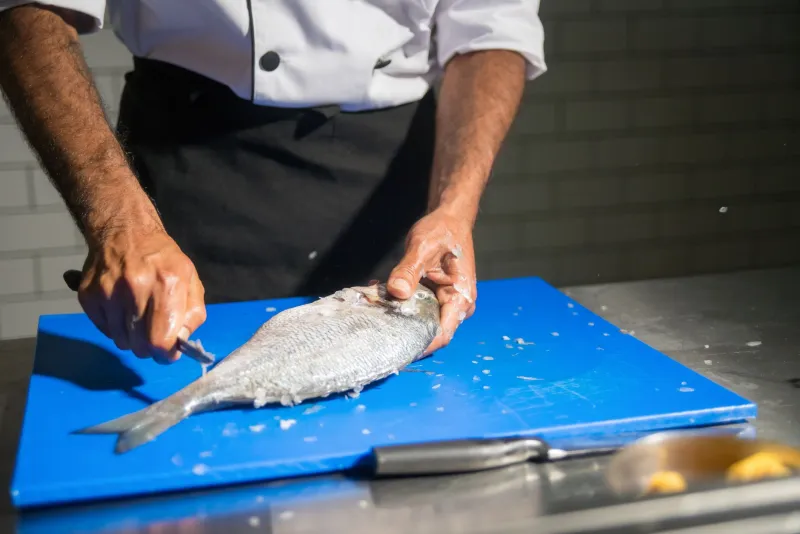
"The Mediterranean part of what I cook assumes certain things about the environment," says chef Dimitri Papadopoulos, a Greek-American who has run a seafood-focused restaurant in Brickell for eleven years. "Lemon thyme at a certain time of year. A particular quality of fish in the fall. Those assumptions are getting less reliable every season."
Paradoxically, some of the same chefs who are most troubled by these shifts are also the most equipped to handle them. Cooks trained in Latin American and Mediterranean traditions — traditions that developed in response to scarcity, unpredictability, and environmental variation — carry deep reservoirs of adaptive technique. The question is whether that knowledge can flex fast enough.
Salt in the Wrong Places
The saltwater intrusion issue deserves particular attention because it affects Miami's food supply in ways that aren't always visible to diners. As sea levels rise and groundwater tables shift, salt is moving into farmland that was previously fresh. For some crops, this is catastrophic. For others, it's creating unexpected flavor profiles that a handful of chefs are learning to work with rather than against.
Chef Ana Lima, who sources heavily from small farms in the Redland agricultural district south of Miami, started noticing the change in her sweet potato supply about three years ago. The flavor had shifted — slightly minerally, a little more complex than she was used to. Her first instinct was to find a different supplier. Her second instinct, which she ultimately followed, was to figure out what the changed flavor actually wanted to be paired with.
"It ended up working beautifully with a miso-based glaze I'd been developing," she says. "The salinity in the potato and the umami in the miso were doing something together that I couldn't have planned. But I had to be open to the ingredient as it actually was, not as I expected it to be."
That orientation — meeting ingredients where they are rather than where tradition says they should be — is becoming a survival skill for Miami's most ingredient-focused kitchens.
The Foragers Are Paying Attention
Some of the most granular intelligence about Florida's shifting landscape is coming from the city's small community of professional foragers, who track environmental change on a scale that farmers and chefs often can't. They're noticing things like invasive plant species altering the flavor of wild herbs, changes in mangrove ecosystems affecting the shellfish that filter through them, and shifts in the timing of seasonal wild greens.
One forager who supplies several Miami restaurants and asked not to be named says the data she's collecting in her head — years of observation across dozens of micro-environments — is increasingly alarming. "The biodiversity is thinning in some areas," she says. "Things I used to find reliably are either gone or showing up in places they never used to grow. The map is being redrawn."
For chefs building menus around hyper-local, seasonally specific ingredients, a redrawn map means constant recalibration. Some are responding by deepening their relationships with farmers who are actively adapting their growing practices — experimenting with heat-tolerant varieties, adjusting planting schedules, testing cover crops that can protect soil from the increasingly brutal South Florida summer.
Ancestral Cuisine in a Changed Landscape
There's a deeper tension running through all of this that goes beyond logistics. For chefs whose cooking is explicitly tied to cultural memory — to the way food tasted in a grandmother's kitchen in Cartagena or Thessaloniki or Havana — the idea that the ingredients themselves are changing feels like a form of loss.
"My food is supposed to taste like my mother's food," says chef Rosa Mendoza, who runs a Colombian coastal kitchen in Little Havana. "But if the fish are different and the herbs are different and the soil is different, at what point is it still the same food? That question keeps me up at night."
Mendoza's answer, for now, is to hold the technique and the intention constant while letting the ingredients evolve. The spirit of a dish — what it's trying to communicate, what memory it's trying to invoke — can survive changes in its raw materials if the cook understands it deeply enough.
Other chefs are taking a more documentary approach, treating their current menus as a kind of record of what's possible right now, before conditions shift further. Some are working with local food historians and community organizations to archive recipes and sourcing practices before they become impossible to replicate.
Building for What's Coming
The chefs who seem least rattled by all of this are the ones who have already started building their kitchens around flexibility. Shorter, more responsive menus. Stronger direct relationships with farmers who communicate early and often. A willingness to substitute, improvise, and explain to diners why a dish looks different than it did last month.
Dimitri Papadopoulos rebuilt his menu structure two years ago to remove anything that depended on a single, non-substitutable ingredient. "I love a specific octopus from a specific place," he says. "But I can't build my restaurant around it anymore. I have to be able to pivot."
The irony is that this kind of flexibility — cooking around what's available rather than demanding what's expected — is one of the oldest principles in both Latin American and Mediterranean food traditions. It's how those cuisines were built in the first place, in places where the sea and the land were never entirely predictable.
Miami's chefs didn't invent adaptive cooking. They inherited it. They're just being asked to use it in ways nobody anticipated.