Shell Shocked: How Miami's Mediterranean Kitchens Are Wrestling with the True Cost of Shellfish
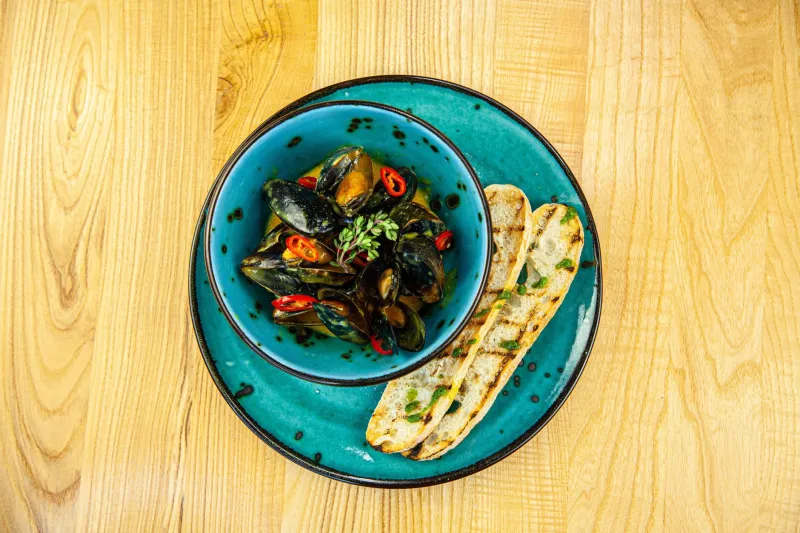
There's a version of Miami dining that lives in muscle memory. You sit down somewhere with white tile, sea glass on the windowsill, maybe a hand-painted mural of the Amalfi Coast or a ceramic fish nailed above the bar. A basket of bread arrives. Then the shellfish — pink shrimp curled over ice, clams steamed open in white wine and garlic, lobster split and charred at the edges, glistening under the kitchen lights. It's a meal that feels like a postcard. It tastes like the coast.
But that postcard is getting harder to send.
Across Miami's Mediterranean dining scene — from the Greek-inflected spots in Tarpon Bay to the Spanish and Italian kitchens scattered through Wynwood and the Design District — chefs are quietly confronting an uncomfortable truth. The shellfish that anchor their menus, the very proteins that give their food its maritime identity, are becoming harder to source responsibly. Florida's coastal ecosystems are under pressure from warming water temperatures, red tide cycles, and decades of overharvesting. And the chefs who built their brand around the sea are now being forced to decide what loyalty to their cuisine actually means.
The Water Doesn't Lie
Florida spiny lobster, Gulf white shrimp, blue crab, local oysters — these aren't just menu items. For chefs rooted in Mediterranean tradition, they're cultural connective tissue. The same way a Neapolitan cook thinks about clams from the Bay of Naples, a Miami chef working in that tradition reaches for what the local water provides. Or used to provide.
The problem is that "local" is increasingly complicated. Gulf shrimp populations have been declining for years, squeezed by habitat loss, trawling pressure, and competition from cheaper imports. Florida spiny lobster, while still commercially harvested, faces scrutiny over bycatch and trap density. Even oysters — often held up as a sustainable shellfish option because they filter water rather than deplete it — depend entirely on the health of the estuaries they grow in, and South Florida's estuaries have had a rough decade.
Some chefs are talking about this openly. Others are making quiet menu adjustments without announcing them. A few are doubling down, convinced that sourcing harder and smarter is the answer. What's interesting is that the conversation itself — the fact that it's happening at all — marks a real shift in how Miami's restaurant culture is thinking about the coast it sits on.
The Pivot Crowd
A handful of chefs have started looking inland and across the ocean for answers. That sounds counterintuitive for a cuisine defined by the sea, but the logic holds: if you can't get what you need from stressed local waters without making the problem worse, you either find a cleaner source or you rethink the dish.
Some are turning to farmed shellfish from the Pacific Northwest and the Gulf Coast of Louisiana, where aquaculture operations have invested heavily in sustainable practices. Others are quietly replacing shrimp-heavy dishes with alternatives that carry similar textural weight — think hearts of palm prepared to mimic the bite of crab, or local lionfish (an invasive species whose harvest is actively encouraged by Florida wildlife authorities) standing in for more traditional catches.
Lionfish, in particular, has become something of a cause célèbre in Miami kitchens. It's delicious, it's plentiful, and catching it actually helps the reef. For a chef trying to honor the spirit of Mediterranean coastal cooking — light, briny, built around whatever the water gives you — it's almost poetic. The water is giving you this fish. You'd be foolish not to take it.
The Purists Aren't Wrong Either
Not everyone is pivoting, and the pushback from traditionalists is worth hearing. There's a real argument that abandoning local shellfish entirely isn't the answer — that it removes the economic incentive for fishermen to advocate for better water quality and sustainable harvesting practices. If Miami's restaurants stop buying local Gulf shrimp, the fishermen who catch them don't suddenly become conservationists. They either fish harder for export markets or they disappear entirely, taking generations of coastal knowledge with them.
Some chefs are responding to this tension by becoming more deliberate buyers rather than less frequent ones. That means working directly with small-scale harvesters who use trap-to-table practices, paying premium prices for certifiably responsible catches, and being honest with diners about why those prices exist. It's a harder sell at the menu level — nobody loves a price hike — but it's a model that keeps the cultural chain intact while pushing the industry toward better behavior.
A few restaurants have gone further, hosting sourcing dinners where the fisherman shows up alongside the chef, walking guests through where the food came from and why it costs what it costs. It's part meal, part civics lesson. Miami diners, who tend to be sophisticated about food culture in ways that still surprise outsiders, seem to respond well to it.
What the Dish Owes to the Place
Here's the philosophical knot at the center of all this: Mediterranean cuisine, in its truest form, has never been about rigid ingredient lists. It's always been about place. About cooking what the land and water around you produce, with the techniques your family handed down. The great seafood dishes of Italy, Greece, Spain, and North Africa didn't start as recipes. They started as responses to what was available.
In that sense, a Miami chef who swaps stressed Gulf shrimp for responsibly farmed clams, or replaces lobster with local lionfish, isn't betraying the tradition. They might actually be honoring it more faithfully than the chef who insists on the "authentic" ingredient regardless of where it comes from or what harvesting it costs the ecosystem.
The soul of a dish isn't trapped inside a specific species. It lives in the approach — in the olive oil, the garlic, the acid, the heat, the restraint, the generosity. Those things travel. Those things adapt.
The Longer Conversation
Miami's Mediterranean chefs don't have this figured out. Nobody does. But the fact that the conversation is happening — in prep kitchens, at supplier meetings, over late-night drinks after service — matters. It means the people cooking this food are paying attention to something beyond the plate.
Florida's waters are still remarkable. The sunsets over Biscayne Bay still look like something out of a Sorrentino painting. The fish that come out of these waters, when they're treated right, still carry a flavor that no import can replicate. But that's only going to stay true if the people who depend on it — chefs, fishermen, diners — are willing to ask harder questions about the cost of their appetites.
Some of Miami's best shellfish dishes are being reimagined right now, in real time, by cooks who love the cuisine enough to change it. That's not a crisis. That's the tradition working exactly the way it was always meant to.