Old Roots, New Cups: Miami's Latin Roasters Are Bringing Back the Beans Nobody Wanted
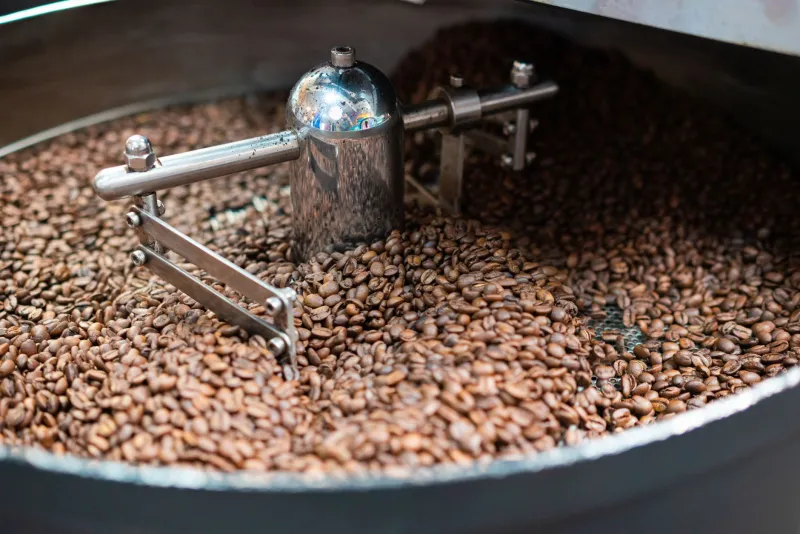
There's a small bag of green coffee sitting on a shelf in a Little Havana roastery that took three years and two flights to Guatemala to obtain. The beans inside are Maragogipe — an almost comically large mutation of the Typica variety, sometimes called the Elephant Bean, that was nearly abandoned by commercial growers decades ago because it produces lower yields and doesn't travel especially well. But roast it right, and it tastes like stone fruit and dark chocolate had a very good week together.
"When I first cupped it, I just sat there," says Alejandro Fuentes, who runs Raíz Coffee Collective out of a converted garage near Calle Ocho. "I kept thinking — why did we ever stop growing this?"
That question is driving a quiet but serious movement in Miami's coffee culture. A new generation of Latin roasters — many of them first- or second-generation immigrants with deep family ties to coffee-growing regions — are heading south to connect directly with small farms in Guatemala, Honduras, El Salvador, and Nicaragua. What they're finding isn't just good coffee. It's a living archive of agricultural traditions that industrial monoculture came dangerously close to erasing.
How the Industry Narrowed Everything Down
To understand why heirloom beans matter, it helps to understand how the coffee industry got so monotonous in the first place. Through the mid-20th century, global demand for coffee exploded, and with it came enormous pressure on Central American growers to maximize output. Traditional varieties — some of them cultivated over generations, adapted to specific microclimates, soil conditions, and altitudes — were replaced by higher-yielding hybrids that were easier to grow at scale and more resistant to disease.
The tradeoff was flavor. Lots of it. Coffees that once tasted like a specific valley, a specific season, a specific family's particular way of processing the harvest got folded into the undifferentiated brown wave of commercial blends.
"My grandfather grew Bourbon and Typica on his farm in Honduras," says Daniela Reyes, who co-founded the roasting company Tierra Alta with her brother Marco two years ago. "By the time my father was old enough to work the land, they'd switched to Catimor because the co-op told them to. It was heartbreaking for him. He always said the old coffee tasted like the mountain."
Marco spent the better part of 2022 traveling through Honduras's Marcala region, visiting farms that had quietly held onto pre-industrial varieties — sometimes just a few rows of old Bourbon plants tucked behind the main crop, maintained almost out of stubbornness or sentiment. He came back to Miami with samples and a list of farmers willing to work with a small importer willing to pay a fair price.
The Farm-to-Cup Pipeline Is Getting Personal
What separates Miami's emerging heirloom coffee scene from broader specialty coffee trends is how personal the sourcing relationships are. This isn't just about traceability — it's about kinship. Many of the roasters working in this space are buying directly from extended family members, childhood neighbors, or farmers their parents knew. The supply chain is less a business model than a reconnection.
Fuentes, for instance, sources his Maragogipe from a single family in Huehuetenango, Guatemala — the Ajú family, whom his parents knew when they lived there before immigrating to the US in the early 1990s. He visits once a year, helps with harvest when he can, and brings back a limited quantity that sells out within weeks of each roast run.
"People in Miami get it immediately," he says. "They understand what it means to have a relationship with a place and a family across a border. That's just how a lot of us live."
That cultural fluency is part of what makes Miami such a natural home for this kind of coffee project. The city has always been a hub for Latin American commerce and migration, and its food and beverage scene increasingly reflects that complexity. The same instincts driving chefs to seek out heirloom tomatoes and heritage-breed pork are now showing up in how roasters think about their green coffee sourcing.
What These Beans Actually Taste Like
If you've only ever drunk commodity coffee — or even standard specialty coffee — the flavor profiles of true heirloom varieties can be genuinely startling. At a recent tasting event hosted by Tierra Alta at a Wynwood café, guests worked through four different single-origin offerings, each one a variety you won't find at a chain:
A Pacamara from El Salvador (itself a hybrid of Maragogipe and Pacas, but developed in the 1950s and now largely abandoned by commercial farms) that tasted almost savory — like roasted red pepper and a hint of tamarind. A Java variety from a Nicaraguan farm that had a deep, almost winey quality, like you'd dropped a dried fig into your espresso. A Guatemalan Typica processed naturally that was floral and bright, more like a tea than anything you'd expect from a dark roast. And the Honduran Bourbon from Daniela and Marco's family connection — the one that supposedly tastes like the mountain — which was earthy and complex in a way that felt genuinely old.
"People kept asking if we'd added something to it," Daniela laughed. "No. That's just what coffee used to taste like."
Preservation as a Business Model
There's an argument to be made that this isn't just culturally meaningful — it's economically smart. Specialty coffee commands significantly higher prices than commodity beans, and farms that can offer unique, traceable, heirloom-variety lots are increasingly sought after by roasters willing to pay premiums. For small Central American growers who've spent decades competing on volume and losing, differentiation is a lifeline.
Fuentes is working with the Ajú family to expand their Maragogipe acreage for the first time in thirty years. Tierra Alta has helped two Honduran farms get certified through a third-party quality program that opens doors to additional US buyers. Small steps, but meaningful ones.
"We're not trying to save the whole industry," Marco says. "We're just trying to keep some of these flavors alive. And if we can help a few families make a better living doing it, then that's the whole point."
Where to Find It in Miami
The heirloom coffee movement is still small enough that you have to know where to look. Raíz Coffee Collective sells online and at a handful of Brickell and Coral Gables cafés. Tierra Alta does pop-ups in Wynwood and ships nationally. A few other roasters — including one operating out of Hialeah with a focus on Nicaraguan varieties — are starting to build similar direct-trade relationships.
If you get the chance to attend a cupping event, go. It's the fastest way to understand what all the fuss is about. Sit down with four or five cups in front of you, slow down, and actually pay attention to what you're tasting. Somewhere in there, if you're lucky, you'll find a cup that tastes like a specific place, a specific history, a specific family's decision to hold onto something the world told them wasn't worth keeping.
That cup will ruin you for regular coffee. But in the best possible way.