Gulf Water, Mediterranean Soul: How Miami's Italian and Greek Chefs Are Falling in Love with Florida Fish
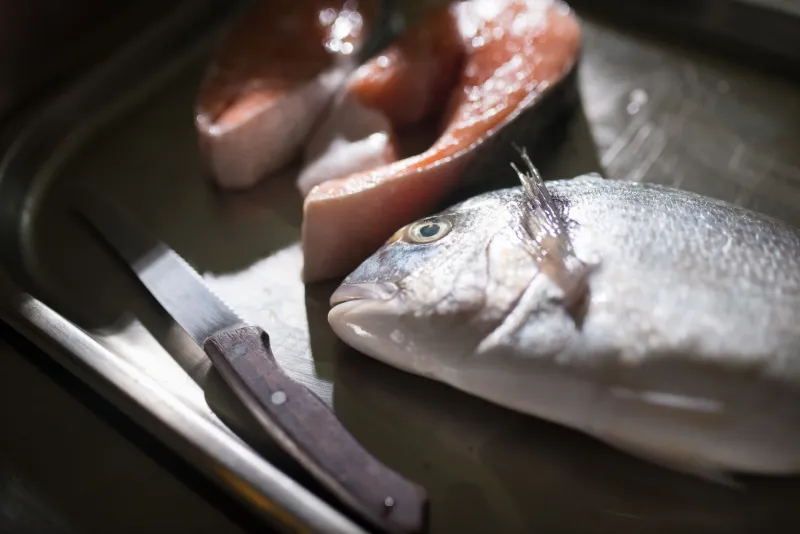
There's a quiet argument happening in the kitchens of Miami's best Mediterranean restaurants. It doesn't involve raised voices or thrown pans. It plays out in the space between a chef's instinct and a fisherman's cooler — in the moment when someone holds up a whole Florida red snapper and asks, sincerely, can we work with this?
The answer, it turns out, is complicated. And fascinating. And increasingly, yes.
The Problem with Authenticity
For decades, Mediterranean cuisine in America operated on a kind of implicit contract: if you were doing it right, you were sourcing as close to the original geography as possible. Branzino from the Aegean. Anchovies from the Cantabrian coast. Octopus pulled from waters somewhere near Greece. The logic made sense — these dishes were built around specific fish with specific flavor profiles, textures, and fat content. Swapping them out felt like cheating.
But Miami's restaurant community has never been particularly interested in playing by imported rules. And as local sourcing became less of a trend and more of a baseline expectation among diners, a new generation of Mediterranean-focused chefs started asking uncomfortable questions. What exactly is being honored when you fly in a fish from 5,000 miles away? And what's being ignored when you overlook what's already swimming forty miles offshore?
"I was trained in Naples," says one Brickell-based chef who runs one of Miami's most respected Italian kitchens. "For a long time, I told myself that if I couldn't get the right fish, I just wouldn't put that dish on the menu. Then I tasted a properly handled Florida grouper, and I had to rethink everything I thought I knew."
What Florida Actually Has to Offer
The Gulf and Atlantic waters around South Florida are, by any honest measure, extraordinary. Mahi-mahi, wahoo, yellowtail snapper, stone crab, Gulf shrimp, spiny lobster, pompano — the list of high-quality local catch reads like a menu unto itself. The challenge isn't abundance. It's translation.
Mediterranean cooking was built around specific fish relationships. Branzino's mild, slightly fatty flesh works beautifully with lemon and olive oil because those flavors were developed together over centuries. Greek lavraki, Italian orata, Spanish lubina — these dishes aren't just recipes, they're ecosystems. When you swap the fish, you're not just changing one ingredient. You're introducing a new variable into a finely tuned equation.
The chefs who are making it work have figured out that the key isn't substitution — it's re-calibration. A Florida lane snapper isn't a Mediterranean daurade. But it has its own lean, clean sweetness that responds beautifully to a Provençal-style preparation with capers, olives, and good olive oil. The dish isn't French anymore, strictly speaking. But it isn't pretending to be.
"What I've stopped doing is trying to make Florida fish taste like Mediterranean fish," explains a Miami Beach chef known for her modern Greek-inflected menu. "What I'm doing now is asking what Mediterranean technique can reveal about this particular fish. That's a completely different question, and it leads somewhere much more interesting."
The Holdouts Have a Point
Not everyone is convinced. And their skepticism deserves a fair hearing.
There are certain preparations — salt cod, for instance, or the specific brine-cured anchovies that anchor so many Spanish tapas — where the sourcing isn't incidental. It's the whole point. A boquerone from the Bay of Biscay carries a flavor memory that no local substitute can replicate. The same argument applies to certain shellfish preparations, to specific cured fish traditions, to dishes where the ingredient and the technique evolved in such tight relationship that separating them doesn't just change the dish — it dissolves it.
Some of Miami's most respected Mediterranean chefs maintain a clear line: local sourcing is a value, but not an absolute one. They'll use Florida stone crab because it's genuinely world-class. They'll pass on trying to reinvent boquerones with Gulf anchovies because the result would be a lesser dish pretending to be something it isn't. The distinction isn't snobbery. It's clarity about what each dish is actually trying to do.
Where the Hybrid Is Happening
The most exciting cooking, though, is happening in the space between those two positions. Coral Gables has become something of an unofficial testing ground for this kind of culinary negotiation, with a cluster of restaurants quietly building menus that don't quite fit any existing category.
Imagine a Spanish-trained chef doing a suquet de peix — the classic Catalan fisherman's stew — with Gulf cobia and Florida rock shrimp, finished with a picada that swaps in local peppers alongside the traditional almonds and saffron. The architecture is Catalan. The soul is South Florida. The result is neither a copy nor a compromise. It's something new.
Or consider what happens when you take the slow-braised octopus tradition of the Greek islands and apply it to Florida spiny lobster. The technique — long, patient, wine-soaked — works just as beautifully. The flavor is different, more tropical, less briny. But the generosity of the preparation, the sense that something is being coaxed into tenderness rather than forced into submission, carries through completely.
These dishes don't have names yet. They don't fit neatly into any culinary heritage. But they feel honest in a way that transcontinental shipping can't always guarantee.
The Fishermen Are Part of This Story
One element that often gets lost in the chef-centric narrative: the local fishermen and distributors who are making this shift possible. The quality of Florida seafood at the restaurant level has improved dramatically over the past decade, driven by better handling practices, improved cold-chain logistics, and a small but growing network of day-boat operations that are getting fish from the water to the kitchen faster than most European imports ever could.
Several Miami chefs have built direct relationships with specific boats — knowing not just what species they're getting, but where it was caught, how it was handled, and how long it's been out of the water. That level of transparency is changing what's possible in the kitchen. It's also changing what chefs feel comfortable putting on the plate.
"When I know the fish was caught this morning forty miles offshore, I can do things with it that I'd never attempt with something that's been traveling for three days," says one chef. "The crudo I'm making now is better than anything I was doing when I was importing everything. That's not sentiment. That's just the reality of freshness."
A New Language for an Old Tradition
What's emerging in Miami isn't a rejection of Mediterranean culinary tradition. If anything, it's a deeper engagement with what that tradition actually values — the respect for the sea, the commitment to technique, the belief that simple preparations and honest ingredients can produce something transcendent.
The fish may be different. The water may be warmer. But the instinct driving these kitchens — to understand what the ocean is offering and to honor it fully — is as Mediterranean as it gets.
Miami has always been a city that takes things from somewhere else and makes them its own. The best chefs here aren't choosing between Florida and the Mediterranean. They're building something that could only exist in this particular city, at this particular moment, with these particular waters right outside the door.