Pour Decisions: How Miami's New Wave of Sommeliers Is Tearing Up the Old Pairing Rulebook
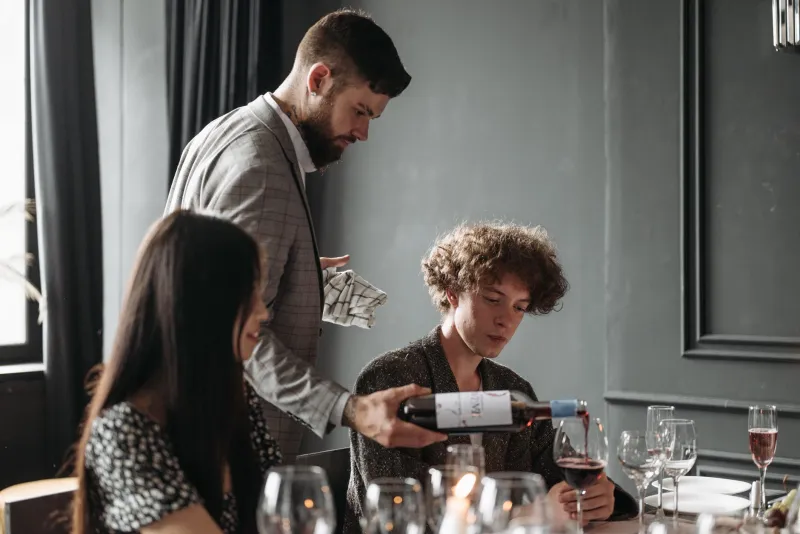
There's a moment that sommelier Valentina Cruz describes with the kind of quiet satisfaction usually reserved for a perfect reduction. She was working a private dinner in Brickell, the table loaded with slow-braised lamb shoulder glazed with guajillo and dried fig, a smear of harissa yogurt on the side, the whole thing perfumed with cumin and fresh oregano. Her wine director instinct told her to reach for a Syrah from the Northern Rhône. Her gut told her something else entirely.
She opened a Malbec from Luján de Cuyo instead — a high-altitude bottle from a small producer in Mendoza that she'd been sitting on for exactly this kind of moment. The table went quiet. Then someone asked for the label.
"People have been trained to think that certain wines belong with certain foods," Cruz says. "But those rules were written by people who never ate ropa vieja or lamb with ají amarillo. The food changed. The rules need to catch up."
In Miami, they're catching up fast.
The City That Never Fit the Formula
Classic wine pairing doctrine was built in European dining rooms, refined in French culinary academies, and exported to the rest of the world as though it were universal law. Light fish, crisp white. Rich red meat, full-bodied red. Delicate flavors, restrained wines. It's a clean system. It just doesn't have much to say about a city where a single plate might carry the influence of three continents and the heat of a Miami August.
Miami's food has always been too layered, too loud, too alive for tidy formulas. And the sommeliers who've grown up eating here — or who moved here and immediately started eating like locals — are increasingly unwilling to pretend otherwise.
"You can't approach a plate of pernil with the same framework you'd use for a Sunday roast in the English countryside," says Jorge Almeida, a wine director at a Wynwood restaurant that splits its menu evenly between Levantine mezze and South American small plates. "The spice profile is different. The fat is different. The acid in the mojo, the sweetness of the plantains alongside it — you need a wine that can actually hold a conversation with all of that."
For Almeida, that often means going to places the traditional canon barely acknowledges. Uruguay's Tannat. Argentina's Torrontés. Chilean País. Portuguese Vinho Verde from the Lima sub-region. Wines with their own complicated histories, their own climates, their own stories of migration and adaptation.
Bottles with Backstories
There's something intentional about the way Miami's immigrant sommeliers talk about the wines they champion. It's never purely technical. When Cruz describes a Carménère from the Colchagua Valley, she's also talking about a grape that arrived in Chile as a refugee from Bordeaux, nearly lost to phylloxera, only to be rediscovered decades later and claimed as something distinctly Chilean. When Almeida pours a Xinomavro from northern Greece alongside a dish of braised octopus with chimichurri, he's drawing a line between two cultures that both know what it means to cook with whatever survived the journey.
"Wine has a diaspora story too," Almeida says. "These grapes traveled. They adapted. They became something new in a new place. That's not so different from what happened to the food on this menu."
It's a framing that resonates in a city built almost entirely by people who brought their flavors with them and figured out how to make them work in South Florida heat. The best sommeliers here aren't just matching tannins to proteins. They're doing something more like cultural translation.
The Pairing Logic That Actually Works Here
So what does the new rulebook look like? According to the sommeliers shaping Miami's wine conversation, it starts with acid and heat — two things the old framework consistently underestimated.
"Latin food is acidic. Mediterranean food is acidic. Citrus, vinegar, fermented things, pickled things — it's everywhere," Cruz explains. "A wine that's too low in acid is going to taste flat and heavy next to that. You need something with enough brightness to stay in the conversation."
That's part of why she keeps returning to high-altitude Argentine whites — Torrontés from Salta, in particular — for dishes that carry citrus-forward sauces or bright herb bases. The elevation gives those wines an almost electric acidity that holds its own against a chimichurri or a tomatillo verde.
For spice, the thinking shifts. "Tannins and capsaicin are not friends," Almeida says flatly. "If you have real heat in a dish — not decorative heat, actual heat — you want either a wine with residual sweetness or something with lower tannin and good fruit. A Garnacha from Spain. A Bonarda from Argentina. Something that cools the fire rather than amplifying it."
And for the fat — the slow-cooked, collagen-rich, deeply savory fat that shows up in everything from Cuban picadillo to Greek lamb kleftiko — both sommeliers agree that the answer is almost always something with more structure than the dish seems to demand. "Fat needs friction," Cruz says. "That's where a well-aged Tannat earns its place on the table."
The Education Problem (and Why It's Slowly Changing)
For all the momentum behind this movement, there's still a structural gap. The major wine certification programs — WSET, the Court of Master Sommeliers — were built around European classics. South American and Eastern Mediterranean wines appear in the curriculum, but rarely as the focus. Students learn to appreciate them as footnotes rather than chapters.
"I passed my exams knowing almost nothing about Uruguayan wine," Cruz admits. "I learned that on my own, by drinking, by reading, by talking to producers when I could get them on the phone."
Both she and Almeida have started doing informal wine education events in Miami — casual tastings, sometimes attached to pop-up dinners, designed to introduce guests to bottles they've never seen on a restaurant list. The response, they both say, has been better than expected.
"People here are ready for this," Almeida says. "They grew up eating food that broke rules. They're not afraid of a wine that does the same."
Late Nights and Better Bottles
There's a version of this story that ends with a grand manifesto, a declaration that the old pairing rules are dead. But that's not really how Cruz or Almeida talk about it. They're not trying to burn anything down. They're just filling in the gaps that a Eurocentric wine education left open — the gap where a bottle of Uruguayan Tannat belongs next to a plate of slow-cooked short rib with black bean sofrito, where a crisp Verdejo from Rueda makes a plate of grilled branzino with preserved lemon sing.
Miami has always been a city that arrived late to other people's parties and then proceeded to throw better ones. Its sommeliers are doing exactly the same thing — showing up with bottles nobody brought to the original conversation, and making everyone wonder why it took so long.