After the Rush: The Secret Apprenticeships Reshaping Miami's Culinary Underground
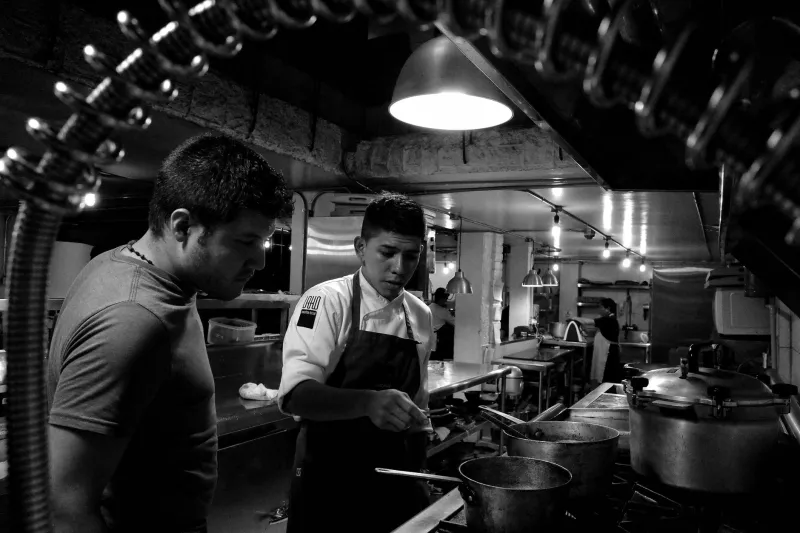
It's past midnight in a commercial kitchen somewhere in Little Havana. The health inspector isn't coming. The investors aren't watching. There are no cameras, no Michelin evaluators, no ticket system running. Just a 58-year-old Peruvian chef named Carlos Quispe standing over a wide sauté pan, walking a 22-year-old through the specific wrist motion required to keep a leche de tigre from breaking under heat.
"You feel that? That's the moment," Quispe says, according to the young cook beside him. "School never teaches you that moment."
This is the other culinary education happening in Miami — the one that doesn't cost $60,000 a year, doesn't come with a diploma, and rarely gets written about. It's informal, it's intentional, and it's producing some of the most technically grounded and culturally fluent young cooks in the city.
The Kitchen After Closing
The setup varies. Some arrangements happen in restaurant kitchens after service ends. Others take place in home kitchens, catering commissaries, or the back rooms of food halls. What they share is an almost conspiratorial intimacy — a deliberate choice by experienced chefs to pass down knowledge outside the structures that have historically gatekept the industry.
Chef Marisol Vega, who runs a well-regarded Spanish-Caribbean tasting menu in Wynwood, started taking on informal students about four years ago after watching a talented line cook she admired get pushed out of a culinary school program over tuition debt. "That kid had more instinct in his hands than half the externship students I'd ever hosted," she says. "I thought, why am I waiting for a school to send me someone when the person I want to teach is already standing in front of me?"
Vega now mentors two or three cooks a year, meeting with them two nights a week after her restaurant closes. The curriculum, if you can call it that, is fluid — built around what the student needs and what Vega wants to preserve. Last winter, she spent six weeks focused entirely on sofrito variations across the Caribbean basin. The winter before that, she and a mentee reverse-engineered a mojo recipe her grandmother brought from Extremadura in the 1960s.
Why Outside the System
The informal nature of these arrangements isn't accidental. For many of the chefs involved, traditional culinary institutions represent a particular kind of barrier — financial, yes, but also cultural. Programs designed around French technique and European hierarchy don't always make room for the knowledge systems that define Latin American and Mediterranean cooking.
"Culinary school teaches you to be precise," says Alejandro Matos, a Dominican-born chef who spent years in fine dining before opening a small Venezuelan-Caribbean restaurant in Hialeah. "But it doesn't teach you to be patient. It doesn't teach you that a good sofrito takes as long as it takes. It doesn't teach you that some things only make sense if you grew up eating them."
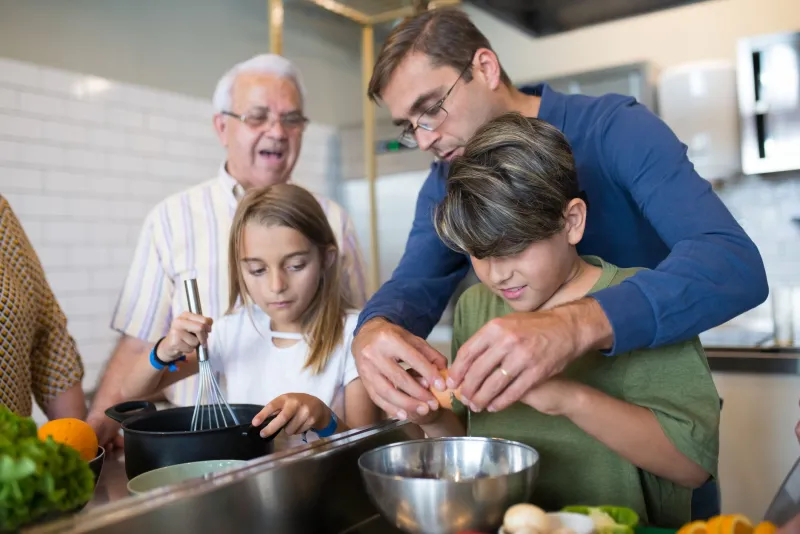
Matos has been running what he calls an "unofficial kitchen residency" for three years. Young cooks — most of them immigrants or first-generation Americans — spend evenings working alongside him, learning not just technique but context. How a dish fits into a family's history. Why certain flavor combinations exist. What a recipe is actually trying to say.
For the mentees, the value goes beyond culinary skill. Several of the cooks who've come through these informal programs have gone on to open their own pop-ups, land spots at respected Miami restaurants, or begin building catering businesses. The network itself — the quiet web of connections formed through these late-night sessions — has become its own form of career infrastructure.
Preserving What Doesn't Get Written Down
There's something else happening in these kitchens that's harder to quantify. A lot of what gets transmitted in these sessions is knowledge that was never meant to be written down in the first place. Techniques passed through families rather than textbooks. Flavor instincts developed over generations. The kind of understanding that lives in muscle memory rather than recipe cards.
Chef Yolanda Ferreira, a Cuban-Portuguese cook who has mentored more than a dozen young women over the past decade, is blunt about what she's trying to prevent. "If I don't teach this, it disappears," she says. "My grandmother's way of handling salt cod — the specific soak, the temperature, the moment you know it's ready — that's not in any cookbook. It's in my hands. And I need to put it in someone else's hands before I'm gone."
Ferreira's sessions are deliberately slow. She resists the pressure to teach efficiently, insisting that certain processes only make sense at full speed — meaning the actual speed at which they were always meant to be done. A two-hour braise cannot be rushed to 45 minutes so a student can get home earlier. The time is the lesson.
The Question of Credit
Not everything about this world is uncomplicated. There are real questions about credit, compensation, and exploitation that hover over informal mentorship arrangements. Who owns a recipe when a mentor teaches it to a mentee who later puts it on a menu? What happens when a young cook builds a following on techniques they learned in someone else's kitchen without attribution?
Most of the chefs involved in these networks say these conversations happen openly, and that the culture of acknowledgment is strong. But they also acknowledge it depends entirely on trust — and that trust, in an industry with a long history of labor exploitation, doesn't always hold.
"I tell every person I work with: this knowledge belongs to both of us now," says Vega. "You carry it forward, you honor where it came from. That's the deal."
A Different Kind of Credential
For the young cooks moving through Miami's informal culinary underground, the credential they carry out isn't a diploma. It's a reputation — the knowledge that they trained under someone specific, that they can do things a certain way, that they were trusted with something real.
In Miami's tight-knit Latin and Mediterranean food communities, that kind of credential moves. Chefs know chefs. A recommendation from Marisol Vega or Alejandro Matos carries weight in rooms where culinary school rankings mean very little.
Carlos Quispe, back in that Little Havana kitchen, puts it simply. "School teaches you what to cook. I teach you why. Those are different things." He adjusts the heat. The leche de tigre holds. The lesson continues.