Contraband Flavor: The Underground Spice Network Quietly Feeding Miami's Best Kitchens
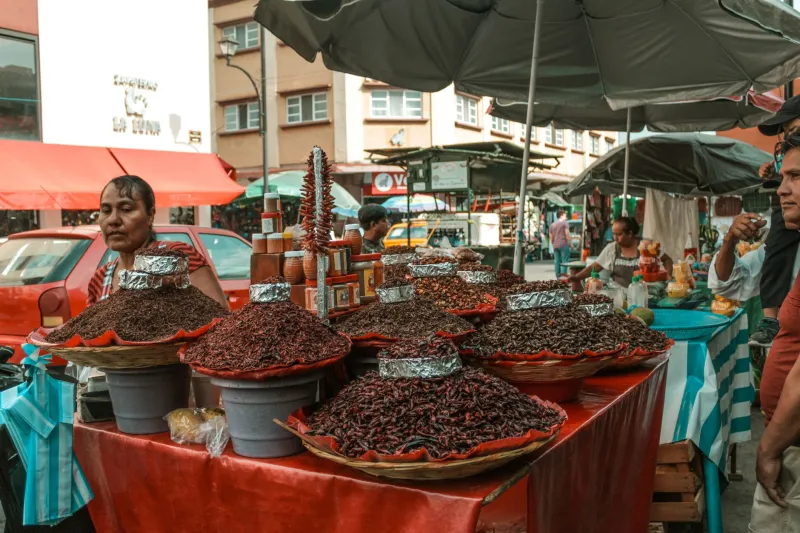
Somewhere in a Hialeah garage, between a chest freezer full of tamale masa and a shelf of unlabeled glass jars, there's a box that arrived last Tuesday from Oaxaca. Inside: vacuum-sealed bags of dried chilhuacle negro peppers, a pouch of hierba santa that still smells like the mountain air it was dried in, and a small bundle of dried avocado leaves that no U.S. distributor currently stocks in any meaningful quantity. The woman who received that box didn't order it from a website. She texted her cousin.
This is how Miami actually eats.
The Gray Zone Between a Suitcase and a Supply Chain
Ask around long enough and you'll find that Miami's most interesting flavors rarely arrive through official channels. They come in checked luggage, in the hands of travelers doing favors, or through a loosely organized network of small-scale importers who operate somewhere between cottage industry and customs risk. Technically, bringing plant-based food products across U.S. borders without proper declaration is illegal — the USDA is not subtle about this. But the enforcement reality is patchier than the rulebook suggests, and the cultural appetite driving this informal trade is enormous.
"I'm not trying to smuggle anything," says one Coral Gables home cook who asked to remain anonymous. "I'm trying to make the mole my grandmother made. Those aren't the same thing." She estimates she sources roughly a dozen ingredients through personal networks each year — mulato chilies, dried shrimp from Veracruz, a particular dried herb used in Yucatecan cooking — because no local store carries what she needs at the quality she wants.
The legal gray area here is real but nuanced. Commercially processed and shelf-stable products are generally easier to bring in than fresh or improperly declared goods. Many home cooks and informal importers navigate this by staying small, staying quiet, and leaning on the personal-use loophole that customs agents often apply loosely to individual travelers. But scale up, start selling, and the picture changes fast.
Why Distribution Fails the Diaspora
The conventional food import system wasn't designed with diaspora communities in mind. It was built for volume, for shelf stability, for products that photograph well in a catalog. The ñora pepper paste a Spanish home cook in Brickell needs for her romesco? The Calabrian dried oregano that smells nothing like the stuff in a grocery store shaker? The Peruvian ají panca that loses half its complexity in the trip from farm to commercial processor? These things exist in a supply chain gap that mainstream distributors have little incentive to bridge.
"Big distributors want ten pallets minimum," explains a Miami-based food importer who works primarily with Latin American producers. "A restaurant that needs two pounds of something specific every month doesn't fit that model. So they find another way."
That other way often means going directly to the source — sometimes through diaspora networks, sometimes through small-batch importers who operate almost like personal shoppers with a commercial license, and sometimes through the kind of informal economy that has always kept immigrant communities fed.
Chefs Are Listening — and Shopping
What makes this underground supply chain particularly interesting right now is who's paying attention to it. Miami's restaurant scene, which has spent the last decade getting serious about provenance and flavor depth, has started quietly tapping into these informal networks. Not all of them — plenty of chefs are locked into distributor contracts and can't easily deviate. But a growing cohort of independent restaurant owners and ambitious cooks are following the home cooks' lead.
One chef at a small Latin-Mediterranean concept in Wynwood — who also declined to be named — says he sources three or four key ingredients through what he calls "community connections" rather than his standard distributor. "There's a woman who brings me dried ají amarillo from a specific region of Peru. It's not the same as what I can order online. The color is different, the heat is different, the whole personality of the dish changes." He pauses. "I'm not going to say more than that about how it gets here."
For chefs working at the intersection of Latin American and Mediterranean traditions — which is basically the beating heart of what Miami's food scene does best — access to authentic, high-quality spices and dried ingredients isn't a luxury. It's the difference between a dish that tells a story and one that just approximates it.
The Cultural Weight of a Dried Pepper
It would be easy to frame this as a food nerd story — enthusiasts chasing extreme flavor. But the people doing the sourcing tend to describe it in much heavier terms. For many Miami families, these ingredients aren't specialty items. They're memory. They're identity. They're the thing that makes a dish taste like home rather than like an interpretation of home.
"When I use the right epazote, my kids recognize the food," says a Mexican-American home cook in Kendall. "When I use the stuff from the supermarket, they eat it, but something's missing. They can't tell you what. But I know what."
That kind of intangible — the flavor that anchors a person to a place and a time — is what the formal food system consistently undervalues and what the informal one has always protected. Miami's spice smugglers, if you want to call them that, are doing something that goes beyond culinary enthusiasm. They're maintaining a living archive of flavor that no distribution catalog can replicate.
What Happens Next
The question floating over all of this is whether the informal network can scale — or whether scaling would kill what makes it valuable. A few entrepreneurs are trying to thread that needle, building small import businesses around specific regional ingredients with proper documentation and USDA compliance. It's slower, more expensive, and requires relationships that take years to build. But it's also the version that doesn't disappear the moment a customs agent has a bad day.
In the meantime, the suitcases keep arriving. The jars keep getting filled. And somewhere in a Miami kitchen tonight, a dish is being made with an ingredient that doesn't officially exist in this city's supply chain — tasting exactly like it should.