Off the Grid and Into the Kitchen: Miami's Secret Herb Growers Are Feeding the City's Best Restaurants
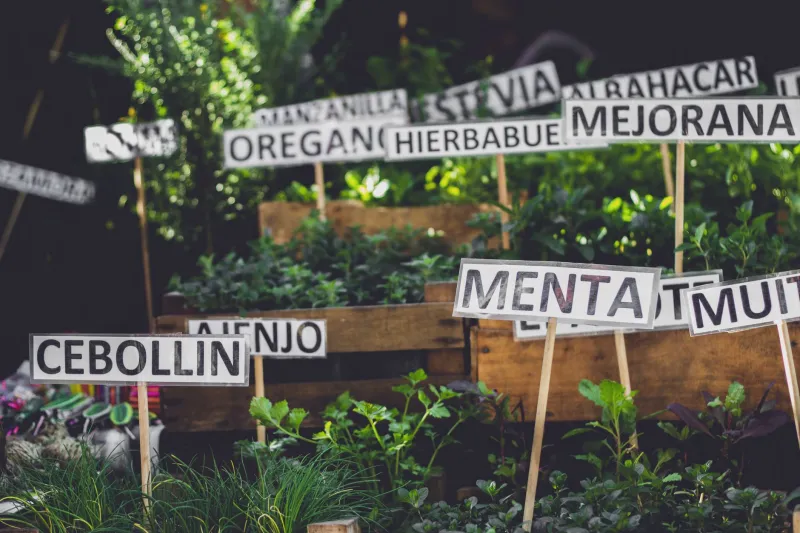
There's a woman in Hialeah who grows four varieties of culantro in her backyard. Not cilantro—culantro, the serrated-leaf cousin that punches harder, lasts longer in the heat, and carries a flavor that most Cuban and Puerto Rican grandmothers will tell you is non-negotiable. She doesn't have a website. She doesn't do farmers markets. But at least a dozen Miami chefs have her number saved in their phones.
This is how a lot of Miami's most interesting cooking actually gets done.
The Supermarket Isn't Enough
Walk into any major grocery chain in Miami and you'll find the usual suspects: flat-leaf parsley, standard cilantro, maybe some sad-looking basil in a plastic clamshell. For everyday cooking, that's fine. But for chefs trying to cook with genuine regional specificity—whether that's a Yucatecan-style recado, a proper Oaxacan mole, or a Greek village stew that tastes like someone's yiayia made it—the supermarket shelf is basically a dead end.
The ingredients that define authenticity in Latin American and Mediterranean cooking are often hyper-regional, climate-sensitive, and culturally specific in ways that industrial supply chains simply can't accommodate. Epazote, the pungent Mexican herb essential to black beans and quesadillas, wilts fast and loses its edge almost immediately after harvest. Fresh Greek oregano—the wild-grown kind, not the dried Italian version most Americans know—has a floral intensity that dried imports can't replicate. Hierba santa, the anise-scented leaf used in southern Mexican cooking, is almost impossible to find commercially in the US. And culinary flowers like squash blossoms or borage, used across both Mediterranean and Latin traditions, require growers who actually care about timing.
So chefs adapt. They find other sources. And in Miami, those sources are often hiding in plain sight.
Who's Actually Growing This Stuff
Miami's growing conditions are, by most agricultural standards, ridiculous in the best possible way. The subtropical climate, long growing season, and culturally diverse population have created a city where backyard food cultivation is practically a tradition. In neighborhoods like Little Havana, Hialeah, Westchester, and parts of Homestead, home gardens aren't a hobby—they're a continuation of how people cooked back home.
Many of these growers are first- or second-generation immigrants who brought seeds with them, or who've spent years tracking down specific varietals through family networks, diaspora community groups, and the occasional international seed exchange. A Guatemalan home grower in Kendall might be cultivating chipilín, a leafy green used in tamales and soups, alongside Mexican papalo and a half-dozen hot pepper varieties. A Greek-American family in Pinecrest might have a thriving patch of authentic Cretan dittany alongside the kind of wild-style oregano that's actually endemic to the Aegean hillsides.
These aren't commercial operations. Most of them are growing for family use first, and the excess—if there is any—gets passed along informally. Word of mouth, community Facebook groups, WhatsApp threads, the occasional handshake deal at a church parking lot. It's a parallel food economy that runs entirely on trust and shared cultural memory.
How Chefs Tap In
The chefs who've figured out how to access these networks tend to share a few traits: they're curious, they're patient, and they've usually spent real time inside the communities they're cooking from. You don't get the Hialeah culantro lady's number by emailing a distributor. You get it because you've eaten at her neighbor's house, or because a line cook introduced you, or because you've been shopping at the same botanica for three years and someone finally decided to trust you.
"It took me almost two years before anyone would sell me anything consistently," says one Miami chef who asked not to be named, citing the informal nature of the arrangements. "And even now, it's not like placing a produce order. I have to work around what's actually growing, what the season looks like, whether someone had a good week or a bad one. It's completely different from how most restaurant sourcing works."
That flexibility is exactly the point. Chefs who cook from these networks have to be willing to let the ingredient lead. If the epazote is coming in strong this week, you build a dish around it. If the Greek oregano is at peak bloom, you figure out how to use it before the moment passes. It's a more improvisational, market-driven approach to menu development—and it tends to produce food that feels genuinely alive.
What This Reveals About Miami's Food Identity
Miami has always been a city where immigrant culinary knowledge gets passed down quietly, outside of official channels. The recipes that define the city's food culture—the ropa viejas, the pernil, the ceviche, the fried fish with gremolata—didn't come from culinary schools. They came from home kitchens, from grandmothers who knew exactly which herb made the difference, from communities that maintained their food traditions even when the ingredients weren't easy to find.
The underground herb networks are an extension of that same impulse. They exist because the industrial food system doesn't have room for the specificity that real cultural cooking demands. And they thrive in Miami because Miami has always been a city that finds ways to keep those specifics alive.
For the chefs who've tapped in, the practical benefits are obvious—access to ingredients that nobody else has, flavors that can't be replicated with commercial substitutes. But there's something more meaningful happening too. Sourcing from these networks means participating in an ecosystem of cultural knowledge, supporting the people who carry it, and cooking food that's rooted in something real.
The Future of Hyper-Local
The term "farm-to-table" has been used so much it's basically lost its meaning. But what's happening in Miami with these herb networks is something the food world doesn't really have language for yet. It's not quite farm-to-table. It's more like community-to-kitchen—a sourcing model built on relationships, cultural continuity, and the kind of ingredient specificity that only comes from people who've been growing something for generations.
A few small-scale specialty producers in the Miami area are starting to formalize what has historically been informal. Some Homestead farms have begun cultivating hard-to-find Latin and Mediterranean varietals specifically for the restaurant market. Seed-saving cooperatives are quietly expanding. Community herb gardens in places like Little Haiti and Allapattah are producing things that would make a chef in New York or LA genuinely envious.
But the backbone of it all—the backyard growers, the home cultivators, the people with four kinds of culantro and a WhatsApp group—isn't going anywhere. And in a city like Miami, where the best food has always come from the places you have to know someone to find, that's probably exactly how it should be.