Grains, Brine, and Time: The Miami Families Who Never Needed a Refrigerator
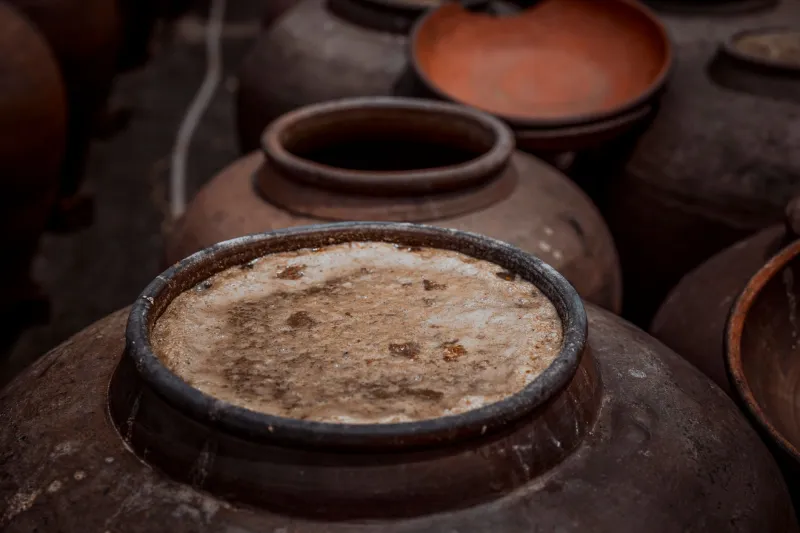
Elena Castellanos keeps a ceramic pot in the back of her Hialeah kitchen that her grandmother brought from Cuba in 1971. It's not decorative. Every few weeks, she fills it with coarse sea salt and whatever needs saving—pork shoulder, whole fish, sometimes duck legs if her nephew drops them off from the market. She doesn't measure. She doesn't time it. She knows.
"My grandmother said the salt tells you when it's done," Elena says, lifting the lid to reveal a pale pink brine clouded with herbs. "You learn to read it. The color, the smell. If you're in a rush, you don't belong in this kitchen."
This is not a nostalgic hobby. It's a living technology—one that predates electricity, ice delivery, and the entire modern cold chain. And right now, it's having a moment in Miami's restaurant scene that nobody saw coming.
Why Chefs Are Going Backward to Move Forward
There's a certain irony in the fact that the most technically ambitious restaurants in Miami are reaching into the past for their edge. But salt preservation—true, old-school, pre-refrigeration salt work—offers something that a walk-in cooler simply cannot: flavor transformation. Salt doesn't just stop decay. It restructures proteins, concentrates sugars, draws out moisture, and creates entirely new textures and tastes over time. The result is depth that you can't shortcut.
Chef Marco Delgado, who runs a well-regarded modern Latin kitchen in Wynwood, started paying attention after tasting a salt-packed snapper at a family gathering in Little Havana two years ago. "I've eaten a lot of fish in my life," he says. "That fish was something else. Firm, almost translucent inside, with this mineral sweetness that I couldn't explain. I asked who made it and they pointed to an eighty-year-old woman sitting in the corner."
He ended up spending three Saturdays in her kitchen before she agreed to show him anything. Now, his restaurant dry-cures a whole side of fish every week using a method she described—coarse salt, fresh oregano, a single dried chile, and time measured not in hours but in days.
The Techniques That Survived the Crossing
Salt preservation arrived in Miami through multiple cultural streams. Cuban, Puerto Rican, Colombian, Dominican, and Venezuelan families each brought their own regional variations, many of which trace back further to Spanish colonial kitchens, and further still to North African and Moorish food traditions—connections that mirror the Mediterranean DNA running through so much of Latin cooking.
The methods break down into a few core approaches, though each family has its own wrinkles.
Dry-salting involves packing meat or fish directly in coarse salt—sometimes mixed with sugar, sometimes with dried herbs or citrus peel—and letting the salt pull moisture out over several days. The result is firm, intensely flavored, and shelf-stable for weeks without refrigeration.
Wet brining submerges proteins in a heavily salted liquid, often with aromatics like bay leaf, garlic, and black pepper. This method is gentler and produces a juicier final product, though it requires more precision in the salt-to-water ratio. Many families in Miami still brine whole chickens for holiday meals using methods passed down verbally, never written.
Salt-packing is the most intense of the three—layers of coarse salt alternated with layers of protein, stacked in crocks or wooden boxes and left to cure for weeks or even months. This is how bacalao—salt cod—has been preserved for centuries across the Spanish-speaking world, and it's the method Elena's grandmother's ceramic pot was designed for.
"You have to commit," Elena says. "You can't open it every day. You have to leave it alone and trust the process."
The Knowledge Problem
Here's what worries the people who care about this: almost none of it is written down.
Salt preservation knowledge in Miami's immigrant communities exists almost entirely in muscle memory and oral tradition. Ratios are described in handfuls. Timing is judged by color and smell. The cues that tell an experienced preserver when something is ready are the result of years of repetition—not a recipe card.
That creates an obvious fragility. As younger generations move into apartments without the storage space for ceramic crocks, as family kitchens give way to takeout and delivery, these techniques are at risk of simply fading out.
Rosa Mendez, a Cuban-American food historian based in Miami, has spent the last four years documenting what she calls "the invisible kitchen"—the preservation knowledge held by older women in Miami's Latino neighborhoods that has never made it into cookbooks or culinary school curricula. "These are sophisticated techniques," she says. "The understanding of salt concentration, of how temperature and humidity affect the cure, of how different salts behave differently—this is real food science. It just lives in people's bodies instead of textbooks."
Her project, still ongoing, involves recorded conversations, hands-on demonstrations, and the painstaking work of translating sensory knowledge into language that can be passed on. It's slow going, and she's acutely aware that some of her sources are in their seventies and eighties.
Salt as Competitive Advantage
Back in the restaurant world, chefs who've taken the time to learn from families like Elena's are noticing real results—not just in flavor, but in the story they can tell about their food.
In a market as crowded and sophisticated as Miami's dining scene, provenance matters. Diners want to know where things come from, how they were made, whose hands touched them. A salt-cured protein made using a technique that predates the refrigerator and traces to a specific cultural lineage carries a weight that a standard brined product simply doesn't.
Chef Delgado has started crediting his salt-curing mentor by name on his menu—a small gesture, but one that's generated genuine conversation at the table. "People want to know who she is," he says. "They want to know the story. That's the dish."
Other chefs are experimenting with finishing salts—using the mineral-rich residue left behind after a long cure as a seasoning element in its own right, sprinkled over crudo or dissolved into sauces. It's a way of extending the preservation technique into the final plate, letting the process become part of the flavor.
Slow, Deliberate, and Irreplaceable
What all of these techniques share is an insistence on time—and a refusal to be rushed. In an industry that prizes efficiency and consistency, salt preservation asks chefs and home cooks alike to surrender a little control, to work with biological processes that don't respond to urgency.
Elena Castellanos is not interested in becoming anyone's supplier. She's not looking to scale. When chefs call—and they do call now, more than she expected—she's selective about who she talks to.
"I'll show you if you're serious," she says. "But if you want a shortcut, go buy something at the store. This is not about shortcuts."
The ceramic pot in the back of her kitchen is full again. Something is curing in there right now, patient and slow, doing what salt has always done: keeping things alive a little longer, and making them better in the process.